The premium pickleball paddle market has crossed the $300 threshold for some legacy brands, yet the underlying materials—Toray T700 carbon fiber, thermoformed construction, polymer and foam cores—are now accessible to lean companies that skip bloated marketing budgets. This guide walks you through every angle of finding a paddle that delivers elite performance without the corporate tax baked into the price tag.
Why Corporate Overhead Inflates Paddle Prices
When you pay $280–$330 for a paddle from a legacy manufacturer, a significant portion of that cost covers athlete endorsement deals, retail distribution margins, and corporate infrastructure. Meanwhile, newer and leaner brands have proven they can match or approach the same on-court performance at a fraction of the price.
The pickleball paddle market added hundreds of new manufacturers in recent years, and manufacturing access has expanded dramatically. Shenzhen production hubs now run dedicated pickleball lines, meaning smaller brands with genuine engineering talent can move from prototype to production without massive capital investment. The key differentiator today is no longer brand age—it is engineering quality, spec transparency, and manufacturing oversight.
What “Zero Corporate Overhead” Actually Looks Like
Brands that operate with minimal overhead share a few traits:
- No multi-million-dollar endorsement rosters. Instead of paying a single pro athlete six or seven figures, these companies rely on real player feedback and community-driven development.
- Direct-to-consumer sales. They skip retail middlemen and sell from their own site, cutting distribution costs.
- Small, focused teams. Family-run or founder-led operations keep administrative costs minimal.
- Transparent specs. They publish core thickness, face material, weight, and swing weight so buyers can compare directly rather than relying on brand prestige.
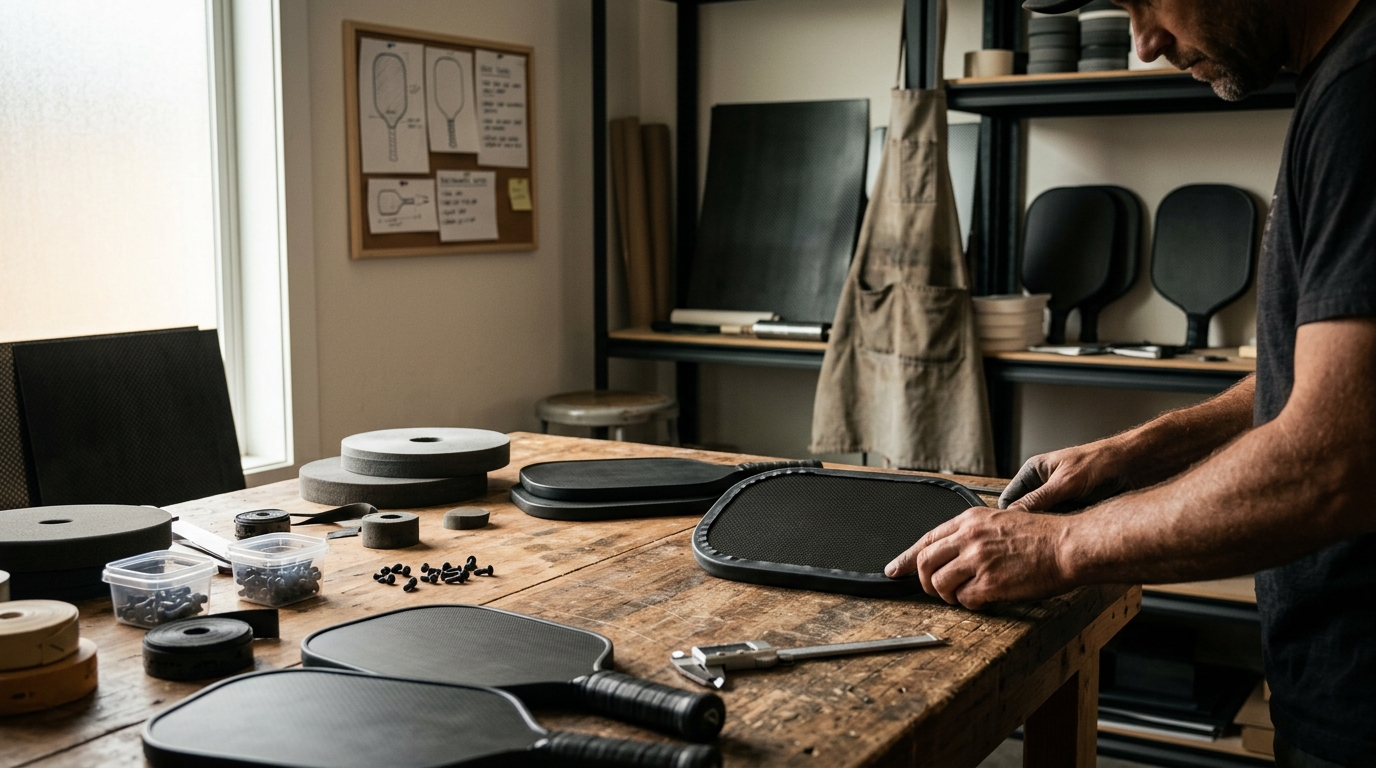
Godfather Pickleball is a textbook example of this model. They started as a player-management agency representing over 100 elite athletes, gaining deep insider knowledge of what separates a good paddle from a great one. Rather than launching as a traditional paddle company with a massive marketing budget, they used years of pro feedback to engineer their own line—then stripped away big-company overhead and inflated markups to deliver gear at a price that keeps the game within reach.
Materials Checklist: What to Demand in Any High-Performance Paddle
Regardless of brand, you should evaluate paddles on their technical merits. Here is what elite-level construction looks like in 2026:
Face Material
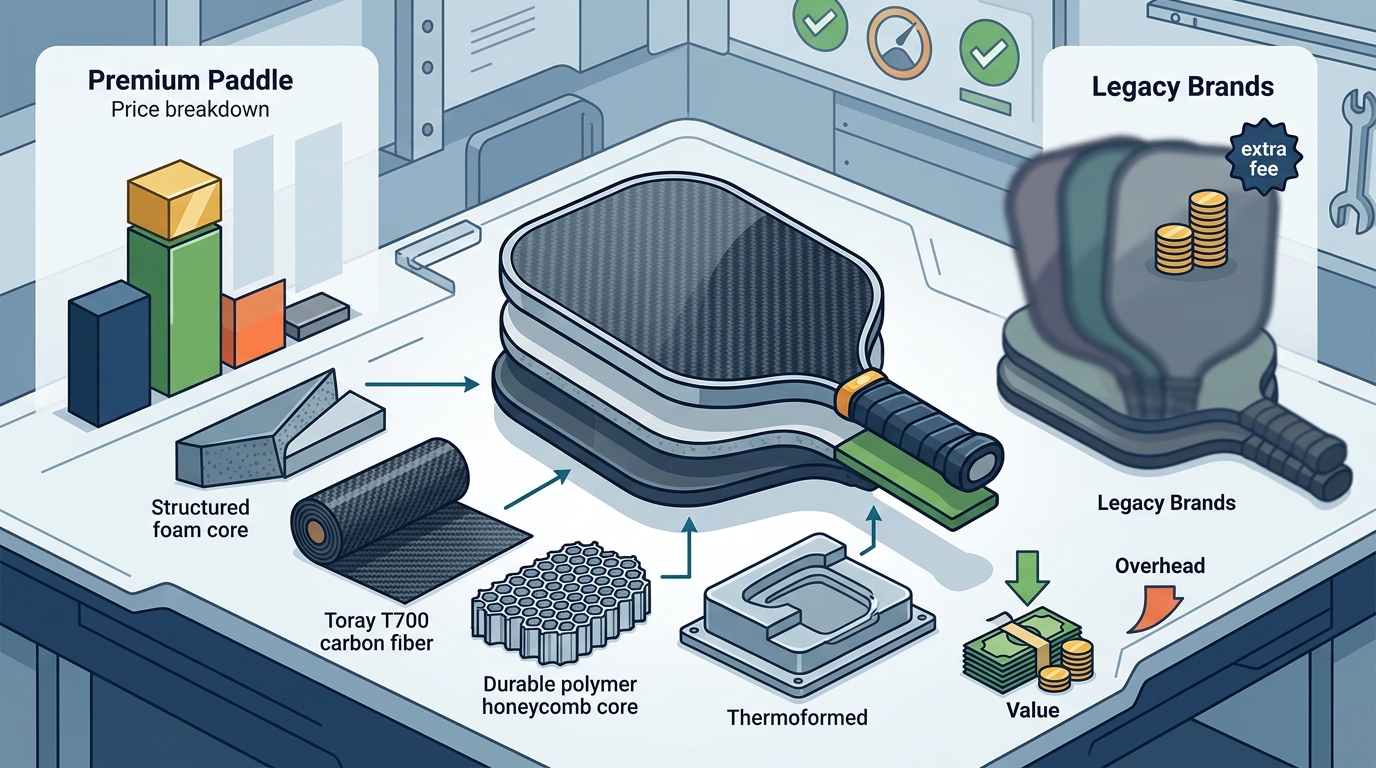
T700 carbon fiber from Toray has become the gold standard at the premium level. It delivers exceptional spin potential, durability, and consistent ball response that cheaper materials simply cannot replicate. Any paddle claiming pro-level performance should specify genuine Toray carbon on its face.
Core Construction
Two dominant options exist today:
- Polypropylene honeycomb: Crisp, responsive feel out of the box. An 8–10mm polymer core delivers heavyweight pop and explosive drives.
- Full-foam cores: Resist crushing and deformation over time, maintaining consistent performance longer than honeycomb. They tend to offer a softer, more plush feel with better dwell time.
Thermoforming
Thermoformed construction fuses the paddle into a single sealed unit, increasing rigidity, enlarging the sweet spot, and improving energy transfer. This was once exclusive to $250+ paddles but is now available across a wide price range.
Grit Longevity
Durable grit is a top trend in the 2026 paddle market. As surface grit wears off, spin paddles become more difficult to control. Look for paddles that specify long-lasting grit technologies so your spin performance does not degrade after a few weeks of play.
Case Study: How Godfather Pickleball Eliminates Overhead
Godfather Pickleball is a small, family-run business in Jacksonville, FL. They began by representing professional athletes, always putting their players' best interests first. After years of working with pros and studying what makes their gear great, they decided to cut out the overhead and deliver the same elite technology directly to players.
Their two flagship paddles illustrate the approach:
The Boss
Built for offense with a dense 8–10mm poly core and three layers of Toray carbon fiber face, The Boss delivers maximum pop from serves to overheads. The widebody shape provides ultra-fast hands at the net without sacrificing power or accuracy.
The SmokeShow
Designed for spin and precision, The SmokeShow combines a gritty Toray T700 carbon surface with a thinner polymer core for faster response and sharper angles. Born from years of pro testing, it is built for slices, topspin, and drives that leave opponents off balance—at an affordable price with no overhead markup.
Both paddles come with a 30-day risk-free trial: your card is not charged until day 35, and you can return the paddle free if it does not fit your game. That kind of confidence-backed trial period is a hallmark of brands that let their product speak for itself.
Five-Step Framework for Evaluating Any Low-Overhead Paddle Brand
- Verify the carbon fiber source. Ask whether the face uses genuine Toray T700 or a generic carbon. If a brand cannot name its supplier, proceed with caution.
- Check the USA Pickleball Approved Paddle List. Any paddle used in sanctioned play must appear on this list. It confirms the paddle meets official standards for surface roughness, thickness, and deflection.
- Read independent reviews. Sources like Pickleball Effect, Pickleball Studio, and The Kitchen test hundreds of paddles annually with calibrated equipment. Cross-reference any brand's claims against third-party data.
- Compare published specs. Legitimate low-overhead brands publish swing weight, twist weight, core thickness, and balance point. If a brand hides its numbers, you are paying for marketing mystique—not engineering.
- Look for a risk-free trial. Brands confident in their product offer 30–60 day play-test windows. If a company will not let you hit with the paddle before committing, their margin may depend on you never discovering the difference.
How the 2026 Market Favors Smart Buyers
The paddle landscape in 2026 is more competitive than ever. Independent reviewers have tested over 200 paddles this cycle alone, and their consensus is clear: the best options are not always the biggest names. Some of the paddles that perform the best come from brands many players have not even heard of yet.
This environment rewards buyers who focus on specs over logos. A paddle does not perform better because it has been on the market longer—it performs better because of its engineering. When a brand removes corporate overhead from the equation, the savings flow directly to you without compromising the carbon, the core, or the craftsmanship.
Key Takeaways
- Corporate overhead—endorsements, retail distribution, administrative bloat—can add $50–$150 to a paddle's price without improving on-court performance.
- Toray T700 carbon fiber and thermoformed construction are no longer exclusive to premium-priced legacy brands.
- Godfather Pickleball built their paddle line from three-plus years of insider pro feedback, then priced it without overhead markup.
- Always cross-reference brand claims against independent review sites and the USA Pickleball Approved Paddle List.
- A 30–60 day risk-free trial is the strongest signal that a brand trusts its own engineering.
Frequently Asked Questions
What does “zero corporate overhead” mean for a pickleball paddle brand?
It means the company operates without expensive layers of corporate infrastructure—large executive teams, retail middlemen, and multi-million-dollar athlete sponsorship deals. By selling direct to consumers and keeping the team small, these brands pass manufacturing-cost savings on to the buyer while using the same elite materials found in $250+ paddles.
Are low-overhead paddles actually as good as premium branded paddles?
Yes, when the engineering is sound. The same Toray T700 carbon fiber, polymer cores, and thermoformed construction used in top-tier paddles are available to lean manufacturers. Independent testing from outlets like Pickleball Effect and Pickleball Studio confirms that brand prestige and price do not always correlate with on-court performance.
How can I verify a paddle meets competition standards?
Check the USA Pickleball Approved Paddle List at equipment.usapickleball.org. Every paddle approved for sanctioned tournament play is listed there by brand and model name.
What makes Godfather Pickleball different from other budget paddle brands?
Godfather Pickleball is not a typical budget brand. They are a player-management agency that represents over 100 elite athletes and used that insider knowledge to design their own paddles. Every paddle is engineered with precision, tested by professional athletes, and sold direct—without the overhead that inflates prices at legacy companies. They also offer a 30-day risk-free trial with no charge until day 35.
What paddle specs should I compare when shopping?
Focus on face material (ideally Toray T700 carbon), core type and thickness (polymer honeycomb or foam, typically 13–16mm), total weight, swing weight, twist weight, and balance point. Brands that publish all of these numbers are signaling engineering confidence rather than relying on marketing.