
The gap between a $300 tour paddle and a $100 upstart has never been smaller. Factory improvements, direct-to-consumer brands, and a flood of independent reviewers with lab-grade testing equipment mean you can assemble a pro-caliber bag without emptying your bank account. Below are seven concrete strategies—each with real product examples and dollar figures—to upgrade every piece of your pickleball kit for less.
Hack 1: Target the Sub-$200 Sweet Spot for Paddles
The most meaningful upgrade you can make is your paddle, and you do not need to spend $300 to get elite performance. As of April 2026, independent reviewers who have tested hundreds of paddles consistently rank options under $200 at the very top of their lists.
The Honolulu J2CR, for example, balances spin, control, and power so well that one tester who has evaluated nearly 100 paddles calls it the best overall paddle of 2026—and it costs roughly $175 with a discount code. The same reviewer noted he prefers it over paddles costing nearly double.
The Vatic Pro V-SOL Pro is another standout. It uses Toray T700 carbon fiber, a foam core for modern dwell time, and retails for about $100 with available discount codes. Multiple review sites describe it as a legitimate heir to Vatic's earlier bestsellers with a meaningful boost in pop and spin.
The takeaway: the sub-$200 bracket is where the performance-per-dollar ratio peaks in 2026.
Hack 2: Add Lead Tape Instead of Buying a New Paddle
Before you replace your current paddle entirely, consider a $5 roll of lead tape. By adding weight to the 4 and 8 o'clock positions on your paddle frame, you increase twist weight, which makes the paddle more stable and effectively expands the sweet spot to pro levels. This is one of the most common modifications among tournament players and costs almost nothing.
Pair lead tape with a fresh overgrip—another sub-$5 upgrade that matters more than most players realize. A worn grip forces you to squeeze harder, sending extra tension into your forearm and elbow. Over time that death grip is a major contributor to pickleball elbow and other overuse injuries. Replacing your overgrip every 10–15 hours of play keeps the connection between hand and paddle feeling crisp.
Hack 3: Buy Direct-to-Consumer Brands
Some of the best-performing paddles in 2026 come from brands many players have never heard of. Companies like Friday Pickleball, 11SIX24, and Enhance use direct-to-consumer models that eliminate the retail markup traditional sporting-goods stores take. Friday Pickleball, for instance, spends nothing on pro sponsorships and passes those savings directly to buyers.
The Enhance Turbo line is a perfect case study. It focuses on maximum performance at an accessible price, using optimized construction to compete with premium paddles without the premium cost. Likewise, the 11SIX24 Pegasus Jelly Bean is widely regarded as one of the best paddles under $100 ever made—available for about $90 with a discount code.
Hack 4: Prioritize Court Shoes Over Everything Else
If there is one corner you should never cut, it is footwear. Running shoes are built for forward motion and softer landings, not the lateral cuts pickleball demands. Court shoes offer sidewall support, torsion control, and outsoles that grip and pivot safely—qualities that directly prevent ankle rolls and knee strain.
You do not need the $180 JOOLA shoe to get proper court support. Budget-friendly options from brands like K-Swiss, Skechers, and Acacia provide legitimate lateral stability at half the price. Rotating two pairs can extend shoe life by roughly a third, which further reduces your cost per hour on court.
If you play three to four times per week, expect to replace shoes every six to eight months. The outsole shows obvious wear, but the more dangerous issue is when midsole compression reduces lateral support invisibly.
Hack 5: Understand Surface Grit Longevity Before You Buy
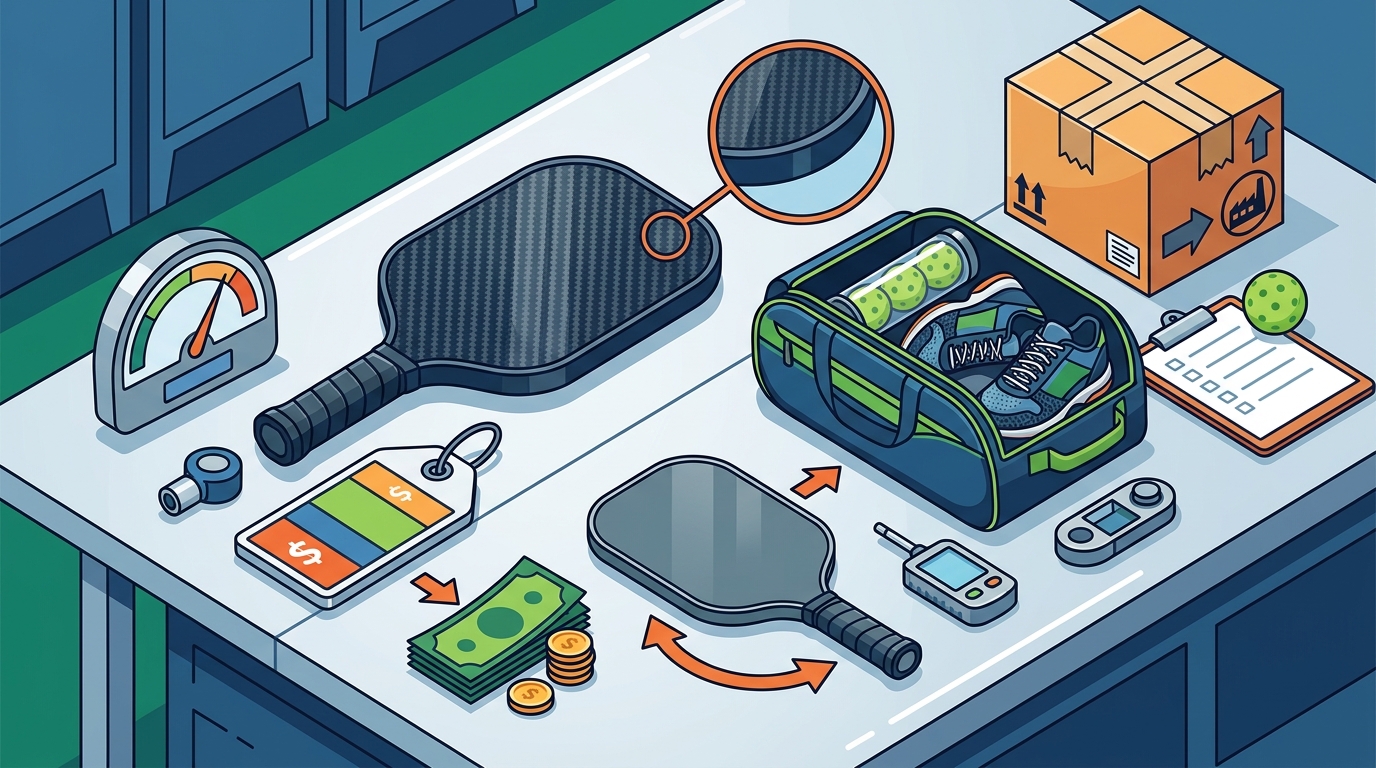
All carbon fiber paddles lose their grit eventually. Whether you pay $50 or $300, friction drops by 20–30 percent after about 100 hours of play. The difference is how long the texture lasts before that cliff.
Brands like 11SIX24 now use peel-ply texture that is chemically etched into the surface, lasting significantly longer than the spray-on grit found on cheaper alternatives. Meanwhile, newer paddles like the Spartus P1 and the 11SIX24 Power2 series are standing out for their longer-lasting grit technology. Buying a paddle with durable texture saves you from needing a replacement in three months, making the slightly higher upfront cost cheaper over a full year.
Hack 6: Match Your Ball to Your Playing Environment
This is the most overlooked budget upgrade. Outdoor balls are harder and heavier with smaller holes and thicker walls, meaning they play faster and require different paddle characteristics. Indoor balls are softer and lighter. Using the wrong ball for your surface is like wearing hiking boots on a basketball court—technically functional but a drag on performance.
A sleeve of quality outdoor balls costs under $15 and lasts multiple sessions. Keeping a separate indoor set ensures consistent feel regardless of where you play. It is one of the cheapest upgrades that immediately improves shot predictability.
Hack 7: Use Demo Programs and Discount Codes Relentlessly
Many local clubs and paddle shops offer demo programs that let you test paddles before committing. Spending at least 30 minutes with any paddle you are seriously considering prevents expensive mismatches between your swing style and the paddle's design.
Nearly every online paddle retailer in 2026 offers discount codes through review sites and newsletters—often 10–20 percent off retail. Stacking these with seasonal sales can bring a $200 paddle into the $150 range. The five minutes spent hunting for a code before checkout is the highest-ROI habit in the sport.
Key Takeaways
- The sub-$200 paddle bracket delivers near-identical performance to $300+ tour paddles thanks to shared T700 carbon fiber and OEM factories.
- Lead tape and fresh overgrips are the two cheapest modifications that make the biggest difference in feel and stability.
- Direct-to-consumer brands skip retail and sponsorship markups, passing real savings to players.
- Court-specific shoes are non-negotiable for injury prevention—do not play in running shoes.
- Surface grit durability varies wildly; buying a paddle with longer-lasting texture saves money long-term.
- Matching ball type to playing surface is a sub-$15 upgrade that immediately improves consistency.
- Demo programs and discount codes are free tools that prevent costly purchasing mistakes.
Frequently Asked Questions
Is there really a performance difference between a $100 paddle and a $300 paddle?
At the intermediate level, the gap is slim. Budget paddles now use the same T700 carbon fiber and thermoformed construction found in premium models because they come from the same OEM factories. Technique and shot selection matter far more than the logo on the handle at most recreational and competitive levels.
How do I make my budget paddle feel more like a pro paddle?
Add lead tape at the 4 and 8 o'clock positions to boost twist weight and expand the sweet spot. Swap your overgrip regularly, and consider edge tape to protect the frame and slightly adjust weight distribution. These sub-$10 tweaks mimic the customizations touring pros apply to their own paddles.
What is the single most impactful low-cost upgrade?
Proper court shoes. They reduce injury risk from lateral movements, improve stability during quick direction changes, and last longer than running shoes on hard-court surfaces. Quality court shoes are available for $60–$90 from multiple brands.
Do I need separate paddles for indoor and outdoor play?
One good all-court paddle handles both environments. The smarter budget move is keeping separate ball types—outdoor balls with smaller holes for wind resistance and durability, indoor balls with larger holes for softer play on gymnasium floors.
How often should I replace gear to maintain pro-level performance?
Quality paddles last one to two years with regular play. Watch for dead spots, delamination, or a mushy response. Shoes need replacing every six to eight months at three-plus sessions per week. Overgrips and edge tape should be refreshed every couple of weeks during heavy use.