
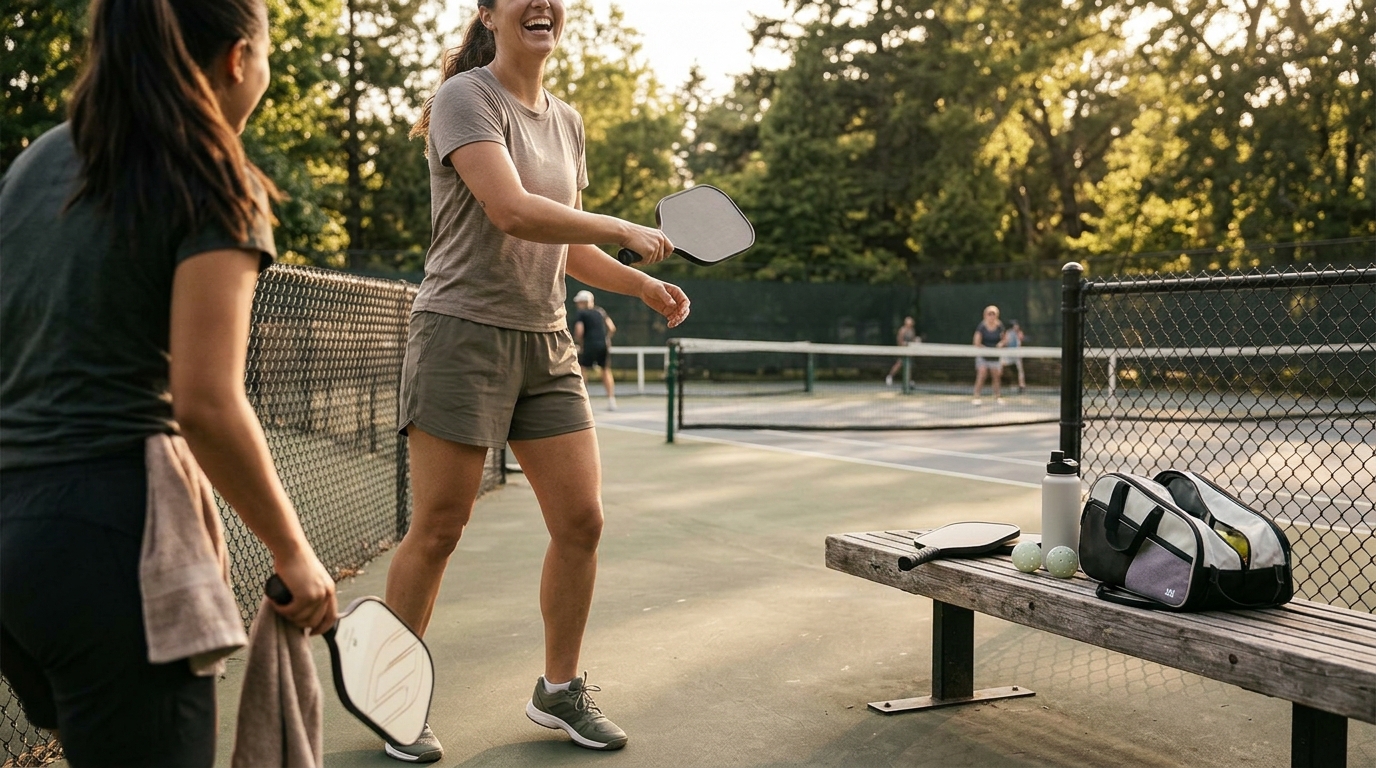
The 2026 pickleball equipment landscape has quietly demolished the old assumption that great gear requires great spending. Thermoformed construction, foam-core technology, and Toray T700 carbon fiber faces have all trickled down from tour-level paddles into models costing half the price. This comparison post puts affordable and premium options head-to-head across four gear categories—paddles, shoes, accessories, and balls—so you can see exactly where the savings are real and where splurging still makes sense.
Why the Budget-vs-Premium Gap Is Shrinking
Factory improvements and direct-to-consumer brands have compressed the performance spectrum. Budget brands like 11SIX24 and Vatic Pro now publish swing weight and twist weight data, letting players choose based on physics rather than marketing. As one industry analysis put it, smart players can now get roughly 95 percent of pro-level performance for about 40 percent of the price.
Premium paddles above $200 still offer advantages in consistency and longevity for competitive players, but for most recreational and intermediate players the mid-range tier delivers everything needed to improve shot placement and add spin.
Category 1: Paddles — The Biggest Upgrade Opportunity
| Feature | Budget Pick (~$100) | Premium Pick (~$250) |
|---|---|---|
| Model | Vatic Pro V-Sol Pro | JOOLA Perseus Pro IV 16mm |
| Face Material | Toray T700 carbon fiber | Carbon Friction Surface (CFS) |
| Core | Foam core with dwell time | 16mm propulsion core + Tech Flex foam |
| Sweet Spot | Large, forgiving | Expanded via foam throat insert |
| Weight | ~7.8 oz | ~8.0 oz |
| Price (with codes) | ≈ $99 | ≈ $249 |
Budget Pick: Vatic Pro V-Sol Pro (~$99)
Vatic Pro has long been known for making some of the best budget paddles in pickleball. The V-Sol Pro line uses a foam core that adds dwell time and a plush, consistent feel. The Toray T700 carbon fiber face generates strong spin, and the overall package is ready to play right out of the box without customization. Available in widebody, hybrid, and elongated shapes with multiple handle lengths, the V-Sol lineup is one of the most complete sub-$100 offerings on the market.
Premium Pick: JOOLA Perseus Pro IV 16mm (~$249)
The Perseus Pro IV remains a strong contender in 2026. High-density foam in the throat area increases paddle flexibility, enhancing forgiveness, feel, power, and dwell time. The Carbon Friction Surface rewards players who have developed consistent technique. At 8.0 oz with a 16mm core, it is stable and powerful—but this is performance that many recreational players will struggle to distinguish from the Vatic in a blind test.
The Value Verdict on Paddles
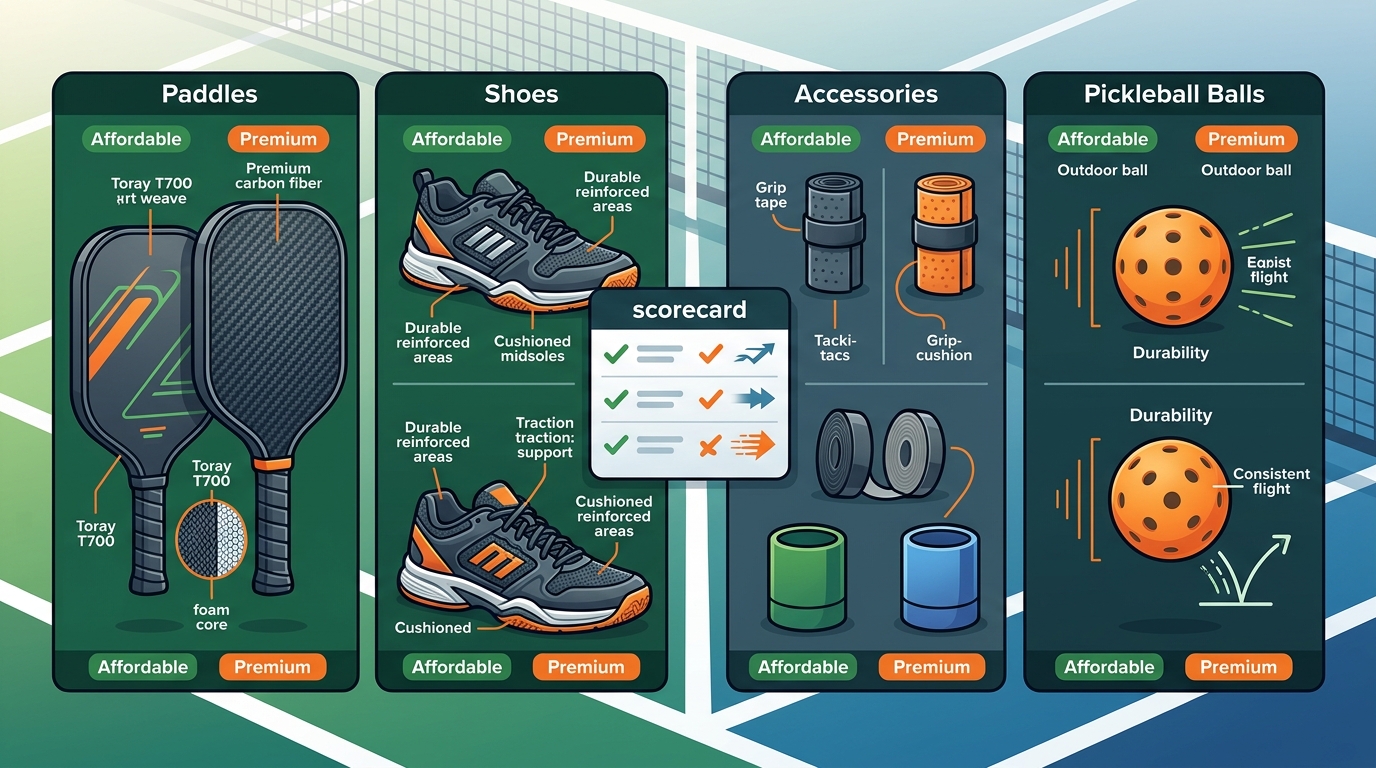
The technology gap between $150 and $250 paddles has narrowed significantly. Your skills matter far more than marginal equipment differences. If you play three or fewer times a week, start with the budget pick and invest the $150 savings in court time or coaching.
The Middle Path: Honolulu J2NF (~$175)
If you want to split the difference, the Honolulu Sword & Shield J2NF costs below $200 and was rated the best overall paddle by Pickleheads after testing over 200 models. It earned near-perfect ratings in power, spin, and control, with the biggest sweet spot of any foam paddle tested. Its fiberglass and carbon fiber surface delivers pop just below the level of the CRBN TruFoam series, which costs roughly $80 more.
Category 2: Shoes — Where Cheap Can Be Dangerous
Unlike paddles, shoes are one area where going too cheap introduces injury risk. Pickleball demands constant lateral movement, quick stops, and fast pivots. Running shoes are not a safe substitute.
| Feature | Budget Pick (~$65) | Premium Pick (~$140) |
|---|---|---|
| Model | Skechers Viper Court Smash | ASICS Gel Resolution |
| Lateral Support | Good | Elite |
| Durability | Moderate | High |
| Break-In Period | Short | None |
Budget Pick: Skechers Viper Court Smash (~$65)
The Skechers Viper Court Smash stands out as the best value option under $75, delivering impressive comfort, grip, and speed without the typical compromises found in cheaper shoes. For players who play two or three times a week, this shoe punches well above its price class.
Premium Pick: ASICS Gel Resolution (~$140)
The ASICS Gel Resolution earns the title of best overall pickleball shoe in 2026 testing. It combines elite grip, comfort, and durability with no break-in period. For players logging four or more sessions weekly, the extra investment pays off through longevity alone.
The Value Verdict on Shoes
Spend at least $60 on a dedicated court shoe. Below that threshold you lose meaningful lateral stability. Above $140, you are paying for marginal durability gains that only daily players will notice.
Category 3: Accessories — Small Upgrades, Big Impact
Accessories are the most overlooked path to a pro-level feel. A few dollars and a few minutes can transform how your paddle performs.
Overgrips: The Single Best Dollar-for-Dollar Upgrade
A worn grip forces you to squeeze harder, sending extra tension into your forearm, elbow, and wrist. Over time, that death grip is a major contributor to pickleball elbow and other overuse injuries. A fresh overgrip costs $3–$6 and restores control instantly. Replace it every two to four weeks if you play regularly.
Edge Guard Tape
Fresh grips improve comfort and control, while edge guard tape helps extend the life of a paddle. Both are an easy way to dial in feel without replacing major gear, making them a smart addition to any 2026 refresh.
Protective Eyewear
Modern pickleball eyewear is lighter, clearer, and more comfortable than players expect. Most players forget they are wearing it after a few minutes. At $15–$40, it is one of the cheapest forms of insurance you can buy for a sport played at close range.
Performance Socks
Pickleball-specific or court-sport socks cushion impact in the heels and forefoot, prevent blisters, manage moisture, and support the arch during long sessions. Cotton socks trap moisture and increase friction—switch to a moisture-wicking pair for under $15.
Category 4: Balls — Don't Overlook the Obvious
The Franklin X-40 Outdoor Ball remains the standard for tournaments and recreational play in 2026, priced at roughly $10–$20 per three-pack. They are USAPA-approved, known for durable construction and consistent bounce. Using the same ball the pros use is the cheapest upgrade of all.
A Realistic Budget Breakdown
| Item | Budget Path | Premium Path |
|---|---|---|
| Paddle | $99 | $249 |
| Shoes | $65 | $140 |
| Overgrips (3-pack) | $6 | $12 |
| Balls (3-pack) | $15 | $15 |
| Bag | $30 | $80 |
| Eyewear | $20 | $40 |
| Total | $235 | $536 |
The budget path costs less than a single premium paddle—and delivers gear that is tournament-legal, durable, and built with the same core technologies used on the pro tour.
When Spending More Actually Makes Sense
Not every upgrade follows the same value curve. Here are three scenarios where the premium option earns its price:
- You play five or more days per week. Foam cores resist crushing and deformation over time, maintaining consistent performance longer than polypropylene honeycomb. A $250 foam-core paddle may outlast two $100 honeycomb paddles, making it cheaper per hour of play.
- You compete in sanctioned events across both governing bodies. In 2026, both USA Pickleball (USAP) and UPA-A certify paddles. Premium models are more likely to carry dual certification.
- You have existing arm or elbow issues. Thicker cores (16mm–20mm) and foam construction absorb more vibration. Investing in arm health now is cheaper than physical therapy later.
Key Takeaways
- Budget paddles from brands like Vatic Pro and 11SIX24 now use the same Toray T700 carbon fiber and foam-core tech found in paddles costing twice as much.
- The Honolulu J2NF (~$175) is rated the best overall paddle across major review sites while costing less than most premium options.
- Shoes are the one category where going too cheap introduces real injury risk—spend at least $60 on a proper court shoe.
- Replacing your overgrip regularly is the single most cost-effective upgrade in pickleball, preventing injury and improving control for just a few dollars.
- A full tournament-ready gear bag can be assembled for under $235—less than the cost of one premium paddle.
- Skill development and court time deliver more performance gains than any equipment purchase at any price point.
Frequently Asked Questions
Can a $100 pickleball paddle really compete with a $250 one?
Yes. Budget brands now use the same Toray T700 carbon fiber and foam-core technology found in premium paddles. Independent testers across multiple review sites confirm that the performance gap has narrowed significantly, with player skill mattering far more than marginal equipment differences.
What is the single most cost-effective pickleball upgrade?
Replacing a worn overgrip. When your grip is worn down, slick, or compressed, you squeeze harder to compensate, and that extra tension travels into your forearm, elbow, and wrist. A fresh grip costs a few dollars and takes minutes to install.
Are budget pickleball shoes safe for lateral movement?
Dedicated court shoes under $75 are safe and effective. The Skechers Viper Court Smash delivers impressive comfort, grip, and speed for lateral pickleball movement. Never substitute running shoes, which lack the lateral reinforcement this sport demands.
How long does a budget pickleball paddle last?
With proper care, quality paddles last one to three years of regular play. Carbon fiber faces tend to maintain consistent performance longer than fiberglass alternatives. Store your paddle in a cover, avoid leaving it in hot cars, and clean the surface occasionally to maintain grip and spin consistency.
Do I need a USAP-approved paddle for recreational play?
For casual games, USAP approval is not strictly required. However, using a certified paddle ensures quality and consistency and is mandatory for tournament play. Check the official approved paddle list before entering any sanctioned event.