
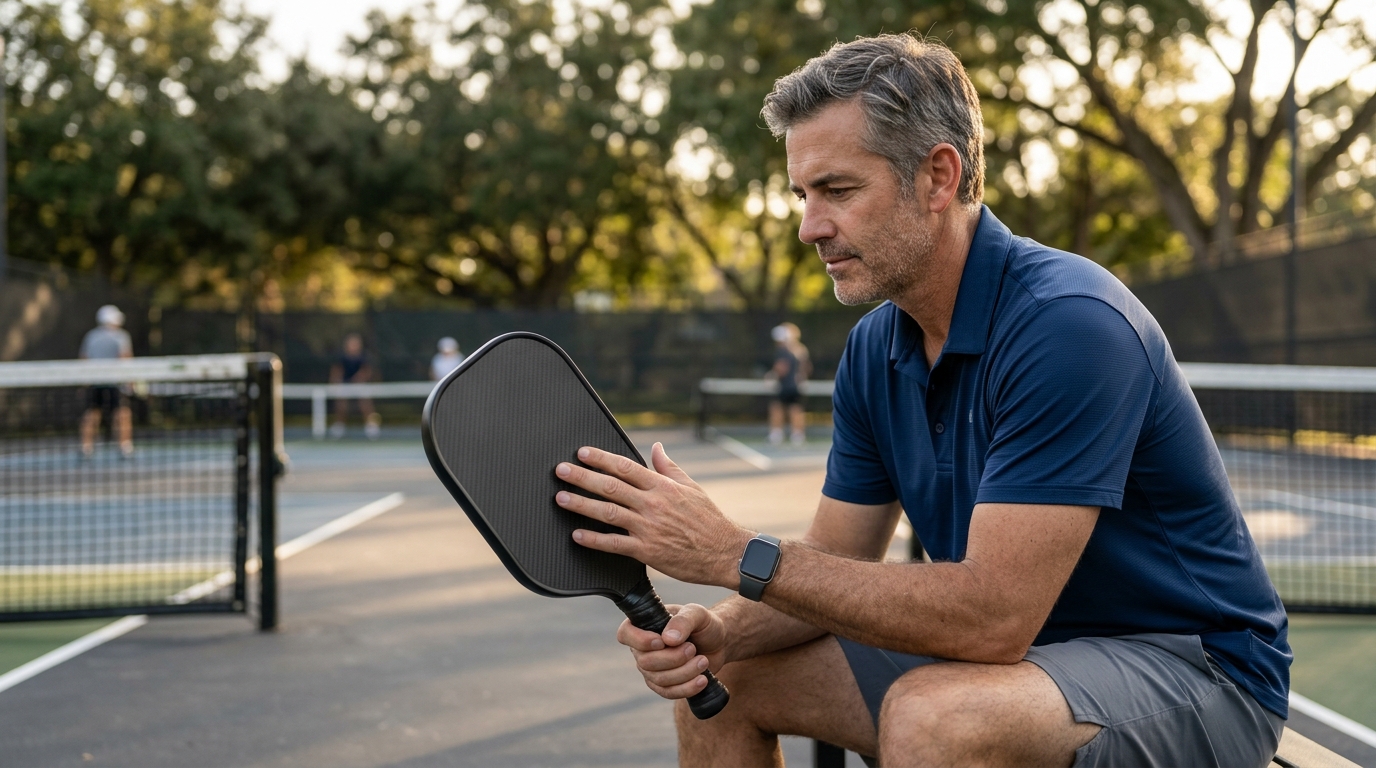
Buying a pro-level pickleball paddle in 2026 is nothing like it was even two years ago. The technology has shifted dramatically, regulations have tightened, and the sheer number of choices can paralyze even experienced tournament players. Rather than listing specs in isolation, this guide gives you a decision framework — a way to evaluate any paddle on the market by understanding how each variable affects your game.
Why the Right Paddle Matters More Than Ever
Pickleball paddle technology has reached an inflection point. After years of manufacturers chasing raw power, the industry is recalibrating toward balanced, precision-oriented designs. Many expert reviewers predict a shift away from maximum-power paddles toward forgiving designs that prioritize consistency and shot placement, especially in doubles play. This means choosing a paddle today is less about finding the most powerful option and more about matching technology to your personal game.
Step 1: Understand Core Construction
The core is the hidden engine of every paddle and the single biggest factor in how the paddle feels and performs.
Polypropylene Honeycomb — The Proven Standard
The polypropylene honeycomb core has dominated the market for years and remains the foundation of most professional paddles. This plastic honeycomb structure creates a lightweight but stable design that balances power and control. Cell size within the honeycomb matters more than most buyers realize: larger cells (around 10 mm) deliver more power and rebound but a smaller sweet spot, while smaller cells (around 6 mm) yield more control, a denser feel, and better consistency. The most common cell size is 8 mm — a middle ground that suits the majority of advanced players.
Foam Cores — The Gen 4 Revolution
Solid foam cores entered the mainstream in 2025 and are rapidly evolving. These paddles offer superior vibration dampening, increased durability, and often a noticeably larger sweet spot compared to traditional honeycomb. In 2026, expect brands to experiment with different foam types including MPP, Pebax, TPU, silicone foam, and polyimide foam. The trend is toward using varying foam densities strategically — denser yet softer foams near the perimeter to increase twist weight and broaden the sweet spot.

Gen 3 Hybrid (Honeycomb + EVA Foam Perimeter)
Gen 3 paddles introduced EVA foam around a honeycomb core. This foam compresses and rebounds on contact, creating a trampoline-like energy return that adds power without sacrificing all control. Interestingly, most professional players are still using Gen 3 paddles. Pros typically add custom weight to their paddles and value the crisp feedback and responsiveness that Gen 3 construction provides over the softer feel of full-foam designs.
Core Thickness: The Overlooked Variable
Core thickness changes the paddle's entire character. A thicker core (16 mm) increases softness, sweet spot size, and control. A thinner core (13–14 mm) produces a firmer feel, more pop, and a more compact sweet spot. For doubles-focused players who prioritize dinks, resets, and hands battles, thicker cores are generally preferred. Singles players who need reach and raw drive power often lean toward thinner, elongated designs.
Step 2: Evaluate the Face Material
While the core determines feel, the paddle face is your direct interface with the ball — and it dictates spin potential, power transfer, and long-term durability.
Raw Carbon Fiber
Carbon fiber is the dominant face material in professional paddles. High-grade variants like Toray T700 have a naturally gritty texture that grips the ball for maximum spin generation. Carbon fiber also has a weight-to-strength ratio stronger than steel, enabling manufacturers to build thin, rigid faces that transfer energy efficiently. If spin and control are priorities, raw carbon fiber is the standard choice.
Fiberglass / Composite
Fiberglass faces flex more on contact than carbon fiber, which stores and releases energy — resulting in more power and a distinctive "pop." Composite and fiberglass-faced paddles are a strong option for aggressive players who rely on drives and put-aways. However, fiberglass generally produces less spin than raw carbon fiber because the surface texture is smoother.
Kevlar and Exotic Materials
Kevlar faces have entered the market from brands like Six Zero, offering an unusual blend of vibration dampening and durability. Hybrid faces that combine carbon fiber with fiberglass or other composites allow manufacturers to fine-tune the balance between power and control, giving players more customized options than ever before.
Surface Grit and Its Longevity
Surface texture for spin is one of the most discussed topics in 2026 paddle tech. Ultra-high-friction carbon or raw composite surfaces are engineered to maximize spin, but the critical question is durability. As grit wears off, power paddles become increasingly difficult to control. Durable grit is widely predicted to be the number-one paddle trend of 2026, with reviewers emphasizing that a paddle's spin performance after 50 hours of play matters more than its out-of-box numbers.
Step 3: Decode the Weight and Balance Specs
Static weight tells you how heavy the paddle is on a scale, but it is only part of the story. Modern paddle evaluation hinges on three dynamic measurements.
Swing Weight
Swing weight measures how heavy the paddle feels in motion. A low swing weight (around 110) makes the paddle fast and maneuverable — ideal for players who rely on quick exchanges at the kitchen line. A high swing weight adds stability and power on full swings like drives and overheads but can slow your reaction time. Serious reviewers independently measure swing weight using calibrated equipment because manufacturer-listed specs are not always reliable.
Twist Weight
Twist weight indicates how resistant the paddle is to twisting on off-center hits. Higher twist weight means a more forgiving paddle with a larger effective sweet spot. Brands are increasingly placing weight at the edges or using perimeter-weighted foam to push twist weight higher — a technique that improves consistency without changing the static weight dramatically.
Balance Point
A higher balance point (head-heavy) adds power to shots but can feel sluggish. A lower balance point (head-light) improves maneuverability but may reduce drive power. For most competitive doubles players, a neutral to slightly head-light balance is ideal because it allows fast transitions between defensive resets and offensive volleys.
Step 4: Choose Your Shape
Shape is not merely aesthetic — it changes reach, sweet spot location, and swing dynamics.
Standard / Wide-Body
The most popular shape in pickleball with a generous sweet spot. Wide-body paddles suit players who want maximum forgiveness and play a balanced game. They are particularly effective for doubles where quick reaction at the net matters more than reach.
Elongated
Elongated paddles sacrifice some width for extra length, giving players more reach on groundstrokes and serves. The sweet spot shifts higher on the paddle face. Power players and singles specialists tend to prefer elongated shapes, but the narrower face demands more precise contact on volleys.
Hybrid
Some manufacturers now offer shapes that split the difference — slightly elongated with a wider mid-section. These are designed to give singles-capable reach without the narrow-face tradeoffs of a fully elongated design.
Step 5: Factor in Thermoforming and Build Quality
Thermoforming is a manufacturing process that uses heat and pressure to mold the paddle into one solid piece. Compared to older glued-together paddles, thermoforming dramatically improved consistency, structural integrity, and ball feel. Virtually every professional-grade paddle released since 2023 uses some form of thermoforming. Foam-injected edges and unibody construction are additional build quality markers that distinguish premium paddles from budget alternatives.
When evaluating build quality, also consider edge guard construction. Some high-end paddles have been reported to have edge guards that loosen prematurely or faces that crack under heavy use. A strong warranty program — particularly one that ships replacements proactively — can be a genuine differentiator at the $200+ price point.
Step 6: Verify Tournament Compliance
If you play in sanctioned events, paddle legality is non-negotiable. USA Pickleball introduced the Paddle/Ball Coefficient of Restitution (PBCoR) test in January 2025 to standardize how paddle power is measured. The UPA-A, which governs professional play, has set a Paddle Efficiency Factor limit of 0.385 and a spin rate ceiling of 2,100 RPM. Starting in 2026, UPA-A approved paddles must include a traceable serial number or NFC chip for enhanced accountability. Always check for the appropriate certification stamp before purchasing a paddle you intend to use in competition.
Step 7: Match the Paddle to Your Playing Style
All the technology in the world means nothing if the paddle does not fit how you actually play. Here is a quick decision matrix:
| Playing Style | Recommended Core | Recommended Face | Ideal Thickness | Shape |
|---|---|---|---|---|
| Control / Touch (Doubles) | 16 mm honeycomb or thick foam | Raw carbon fiber | 16 mm | Wide-body |
| All-Court Balanced | Gen 3 honeycomb + foam perimeter | Carbon fiber | 16 mm | Standard or hybrid |
| Power / Aggressive | 13–14 mm honeycomb or firm foam | Fiberglass or composite | 13–14 mm | Elongated |
| Spin-First | 16 mm honeycomb | Raw T700 carbon fiber (durable grit) | 16 mm | Standard or elongated |
| Comfort / Arm-Friendly | Full foam | Carbon fiber or hybrid | 16 mm | Wide-body |
Key Takeaways
- Core material is king: Polypropylene honeycomb remains the proven standard, but foam cores are reshaping what is possible in sweet spot size and vibration dampening.
- Face grit durability matters more than out-of-box spin numbers. Look for paddles with lasting surface texture.
- Swing weight and twist weight tell you more about real-world feel than static weight alone. Seek independent measurements.
- Thicker cores (16 mm) favor control; thinner cores (13–14 mm) favor power. Match thickness to your style.
- Thermoforming is table stakes for any professional-grade paddle. Look beyond it to foam injection, edge construction, and build consistency.
- Always verify tournament compliance — PBCoR limits, spin rate caps, and certification stamps are all enforceable in sanctioned play.
- Demo before you buy. Spec sheets tell part of the story, but on-court feel is the final arbiter.
Frequently Asked Questions
What core material is best for a professional-grade pickleball paddle?
Polypropylene honeycomb is the most widely used core in professional paddles because it balances power, control, and durability. Foam cores are a growing alternative that offer larger sweet spots and better vibration dampening, but many top professionals still prefer Gen 3 honeycomb with EVA foam perimeter inserts for the blend of crisp feedback and forgiveness.
Does paddle face material really matter at the pro level?
Absolutely. Raw carbon fiber faces (especially high-grade T700) provide the gritty texture needed for maximum spin. Fiberglass faces flex more on contact and produce extra power. Your choice of face material directly impacts spin ceiling, ball feel, and how long the paddle performs at its best as the surface wears.
What is swing weight and why should I care?
Swing weight measures how heavy the paddle feels during the swing arc, factoring in weight distribution rather than just static mass. A paddle with a low swing weight (around 110) is faster to maneuver for reaction-based play at the net, while a higher swing weight adds stability and power on groundstrokes and serves.
What is thermoforming and why do pro paddles use it?
Thermoforming uses heat and pressure to mold the entire paddle into a single, unified structure instead of gluing separate layers together. This process creates a more solid, consistent feel with improved structural integrity and a larger sweet spot — which is why virtually every professional-grade paddle released in recent years uses thermoforming.
Are foam core paddles better than honeycomb?
Neither is universally superior. Foam cores excel at vibration dampening, sweet spot breadth, and comfort. Honeycomb cores deliver crisper feedback and more responsive feel, which many pros prefer. Hybrid designs that combine a honeycomb core with foam perimeter inserts attempt to capture the best of both worlds.
How do I know if a paddle is approved for tournament play?
Look for the USA Pickleball approval or UPA-A certification stamp permanently marked on the paddle. From 2026, UPA-A certified paddles must also carry a traceable serial number or NFC chip. Before any tournament purchase, verify that the paddle meets current limits on the Paddle Efficiency Factor and spin rate.