
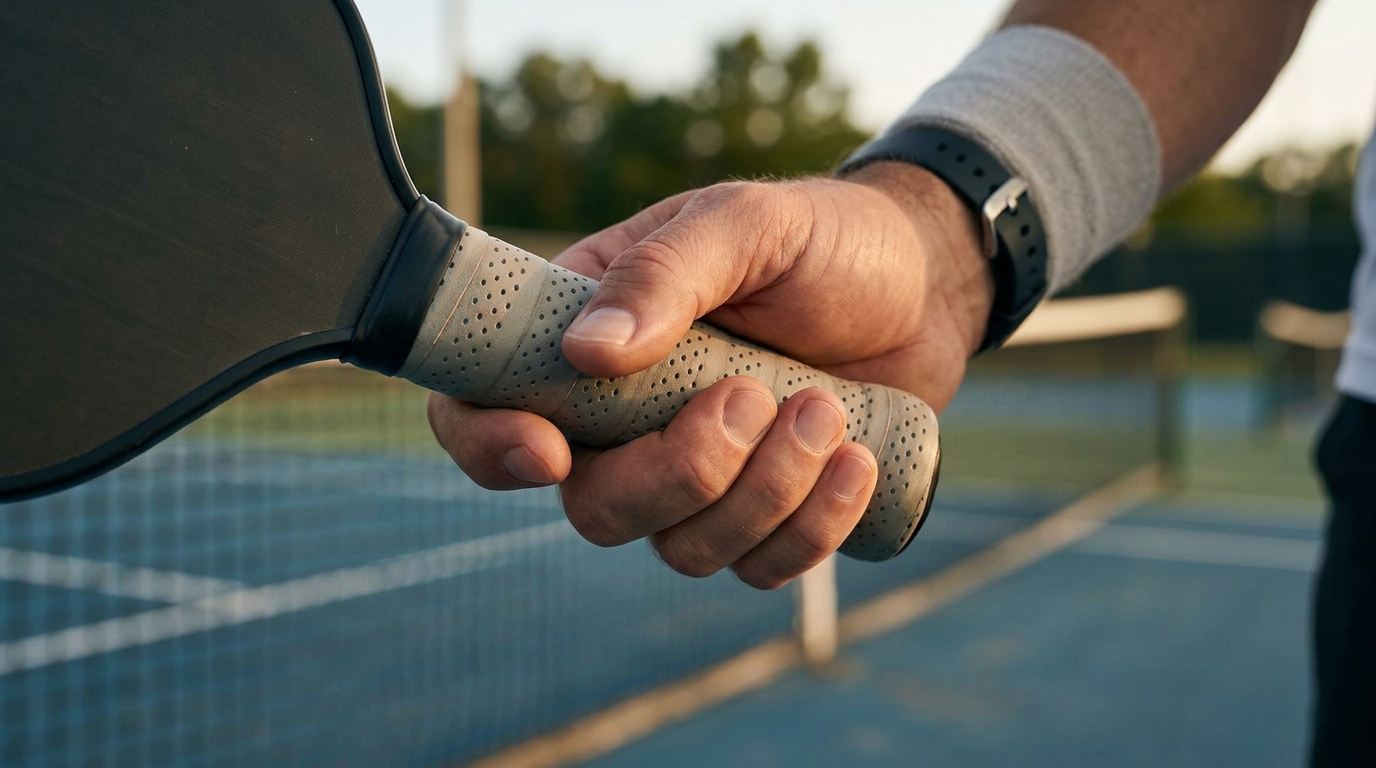
Choosing the correct grip size on your pickleball paddle is one of the simplest upgrades you can make, yet most players skip this step entirely. A grip that is too large limits wrist mobility and makes changing grips harder, while one that is too small forces you to squeeze harder, leading to fatigue and even tendonitis. Whether you are buying your first paddle from the Godfather Pickleball beginner collection or upgrading to a performance model, understanding grip size will protect your body and sharpen your game.
What Is Grip Size?
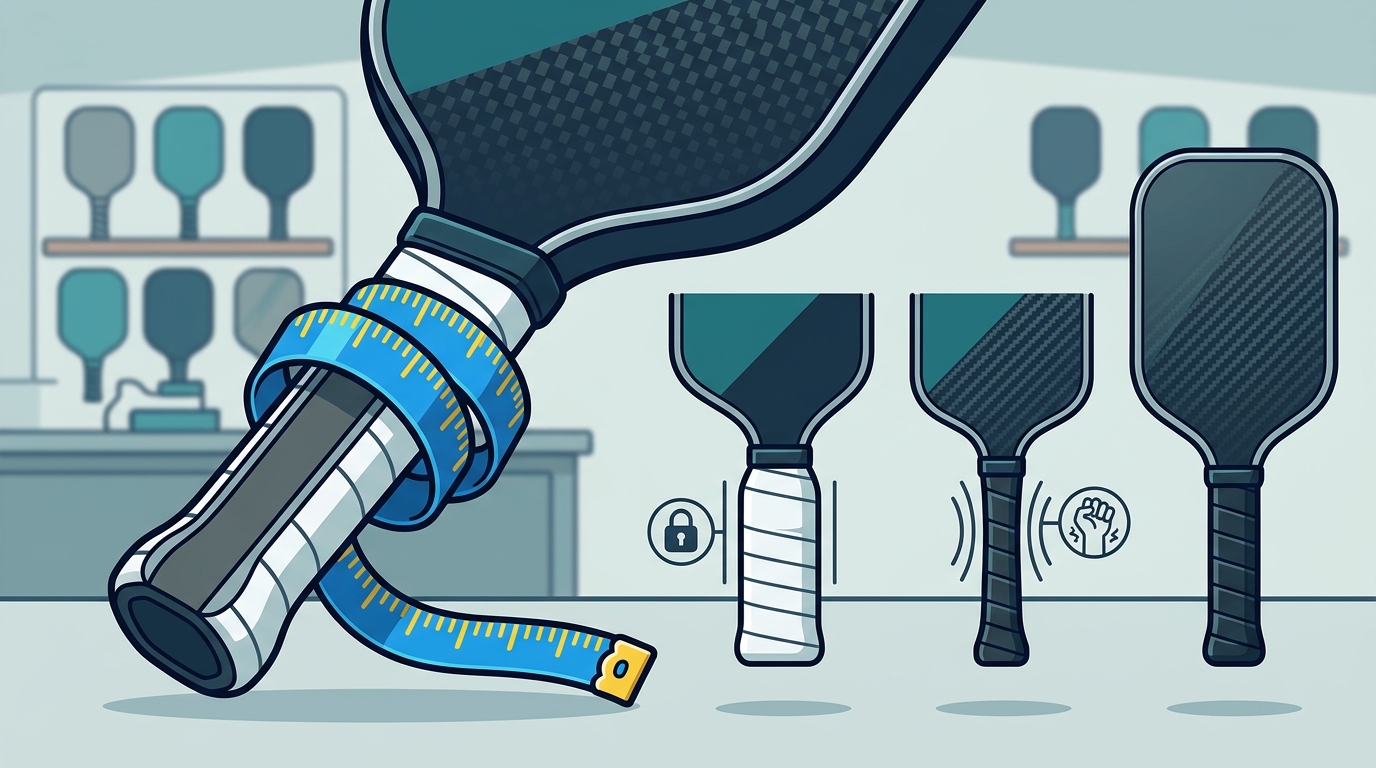
Grip size is the circumference of the paddle handle, measured in inches around its widest point. Most adult pickleball paddles range from 4.0 inches to 4.5 inches in circumference, typically offered in 1/8-inch increments such as 4.0, 4.125, 4.25, 4.375, and 4.5, according to FORWRD's grip size guide. USA Pickleball limits overall paddle dimensions but does not regulate grip circumference itself, so manufacturers have flexibility in handle design.
Why Grip Size Matters
The right grip size directly affects comfort, control, and injury prevention. A paddle that feels like an extension of your arm lets you play more efficiently and stay on court longer. Selecting the correct size distributes hand pressure evenly, minimizing strain from a grip that is either too small or too large.
Injury Risk
Using a significantly smaller grip forces extra squeezing force on every shot. Over time this can affect your hand, forearm, and elbow, leading to fatigue and eventually tendonitis, as noted by Third Shot Drop. A significantly larger grip restricts wrist motion and requires more strength to maneuver the paddle.
How to Measure Your Hand
There are two reliable methods to find your ideal grip size: the ruler test and the index finger test.
Method 1: The Ruler Test
Open your dominant hand palm-up with fingers extended and together. Place a ruler along your ring finger, aligning one end with the bottom lateral crease (the middle of the three palm creases). Measure the distance from that crease to the tip of your ring finger. This measurement will typically fall between 4 and 5 inches and represents the ideal grip circumference for your paddle, according to Selkirk Sport.
Method 2: The Index Finger Test
Hold a paddle with an Eastern forehand grip. Place the index finger of your other hand in the gap between your fingertips and the heel of your gripping hand. If there is no room for your index finger, the grip is too small. If there is a lot of extra space, the grip is too big. Your finger should fit snugly in between.
Grip Size Chart
Use the table below to match your hand measurement to a recommended grip circumference. If you fall between two sizes, choose the smaller one because you can always build it up with an overgrip.
| Hand Measurement | Recommended Grip Size | Typical Player |
|---|---|---|
| Under 4.0" | 4.0" (Size 0) | Junior or small adult hands |
| 4.0" - 4.25" | 4.0" - 4.125" (Size 1) | Most women, smaller men |
| 4.25" - 4.5" | 4.25" (Size 2) | Average adult hands |
| 4.5" - 4.75" | 4.5" (Size 3) | Larger adult hands |
| Over 4.75" | 4.5"+ (Size 4-5) | Extra-large hands |
A thin grip is perfect for small hands, though it provides slightly less cushion. A standard grip is preferred by most athletes for its balance of feel and comfort. A thick grip suits larger hands and adds more cushion, as outlined in the Dick's Sporting Goods paddle buying guide.
Match Grip Size to Your Playing Style
Your playing style should influence your final grip selection. A playing style is the combination of shot preferences, court positioning, and physical tendencies that define how you compete.
Control and Finesse Players
If you favor dinks, drops, and resets, a smaller grip allows more wrist action and spin potential. Players who prioritize touch and finesse often prefer grips on the smaller end of the spectrum. Browse paddles designed for precision in the Godfather Pickleball paddle collection.
Power Players
If you drive the ball aggressively, a slightly larger grip can provide the stability and leverage you need. Power players benefit from the locked-in feel a bigger circumference delivers, though comfort should always come first.
How to Adjust with Overgrips
An overgrip is a thin wrap applied over the existing base grip to modify circumference, texture, or moisture absorption. Most overgrips add approximately 1/16 inch to grip circumference. That means you can freely add an overgrip to a slightly small grip without it feeling too bulky.
Reducing grip size is more difficult and typically requires removing the existing grip tape down to the bare handle. This is why experts recommend starting with a smaller size and building up. Check out the grip and overgrip options at Godfather Pickleball, including the popular Hesacore grip collection, to fine-tune your setup.
Key Takeaways
- Grip size is the circumference of the paddle handle, typically between 4.0 and 4.5 inches for adult paddles.
- Measure from the middle palm crease to the tip of your ring finger using a ruler for the most accurate result.
- If you are between two sizes, go with the smaller option and add an overgrip.
- A too-small grip causes excessive squeezing and risks tendonitis; a too-large grip limits wrist action.
- Control players generally prefer smaller grips for more wrist snap and spin.
- Power players often lean toward slightly larger grips for stability.
- Replace your overgrip when it loses tackiness or shows visible wear.
Frequently Asked Questions
What is the most common pickleball grip size?
Most performance paddles ship with a 4.25-inch circumference because this fits a wide range of adult hands. It is considered the standard or medium size in the sport.
How do I know if my grip is too small?
Hold the paddle with a normal grip, then try to slide the index finger of your other hand between your fingertips and the heel of your gripping hand. If you must shift your fingers away from the heel to fit, the grip is too small.
Can I make my grip smaller if it is too big?
Reducing grip size is difficult. It typically requires removing the existing grip tape down to the bare handle, which is a more involved process. Choosing a smaller grip initially and building up with overgrips offers more flexibility.
Does grip size affect spin?
Yes. Smaller grips allow more wrist action, which can increase spin potential. Larger grips provide more stability but limit wrist mobility, reducing spin generation.
How much does an overgrip add to circumference?
A single overgrip typically adds about 1/16 inch (one size increment) to the handle circumference. Some thicker wraps add up to 1/8 inch.
Should beginners worry about grip size?
Absolutely. Starting with the correct size prevents bad habits and reduces injury risk as you develop your technique. Beginners should measure their hands before purchasing.
Does height determine grip size?
You can use height as a rough estimate, but it is less accurate than the ruler test. Always confirm with an actual hand measurement for the best results.
Where can I get personalized grip advice?
The team at Godfather Pickleball offers personalized gear consultations. Visit the Godfather Pickleball FAQ page to learn how they can help tailor grip, weight, and balance to your game.
Find Your Perfect Paddle at Godfather Pickleball
Now that you know how to measure and select the right grip size, put that knowledge to work. Explore the Godfather Pickleball Performance collection for pro-tested paddles engineered with player feedback and world-class technology. Every paddle is built with intention, from the core to the face, so you can step on the court with confidence.