
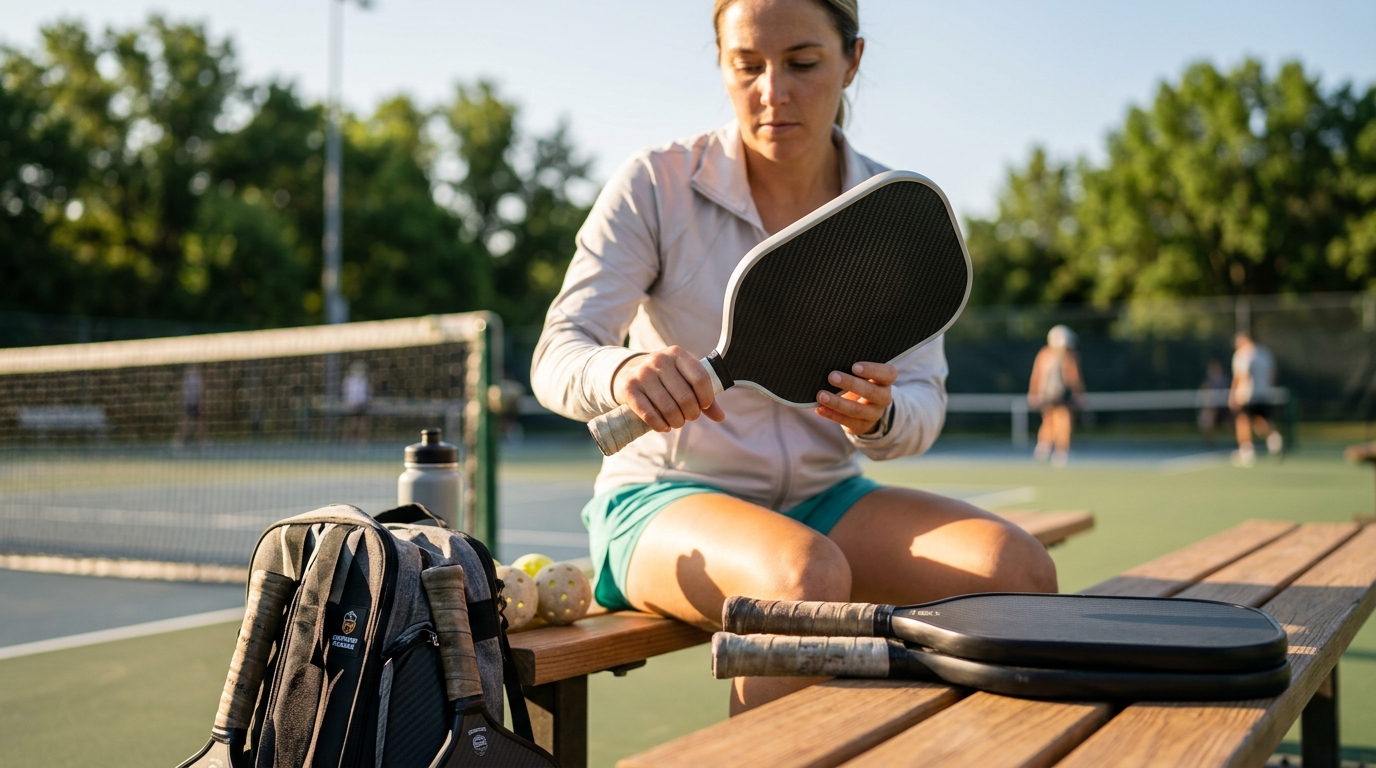
Professional pickleball paddles now cost anywhere from $200 to $333 at full retail, but the truth is you do not have to pay those inflated prices to play with the same equipment the pros trust. The pickleball equipment market is projected to reach $505.6 million in 2026, and as competition heats up, savvy players are finding ways to access elite-level gear at a fraction of the sticker price. This guide breaks down where the markup actually comes from, how to avoid it, and where to find pro-tested paddles that fit your budget and your game.
Understanding the Retail Markup on Pickleball Paddles
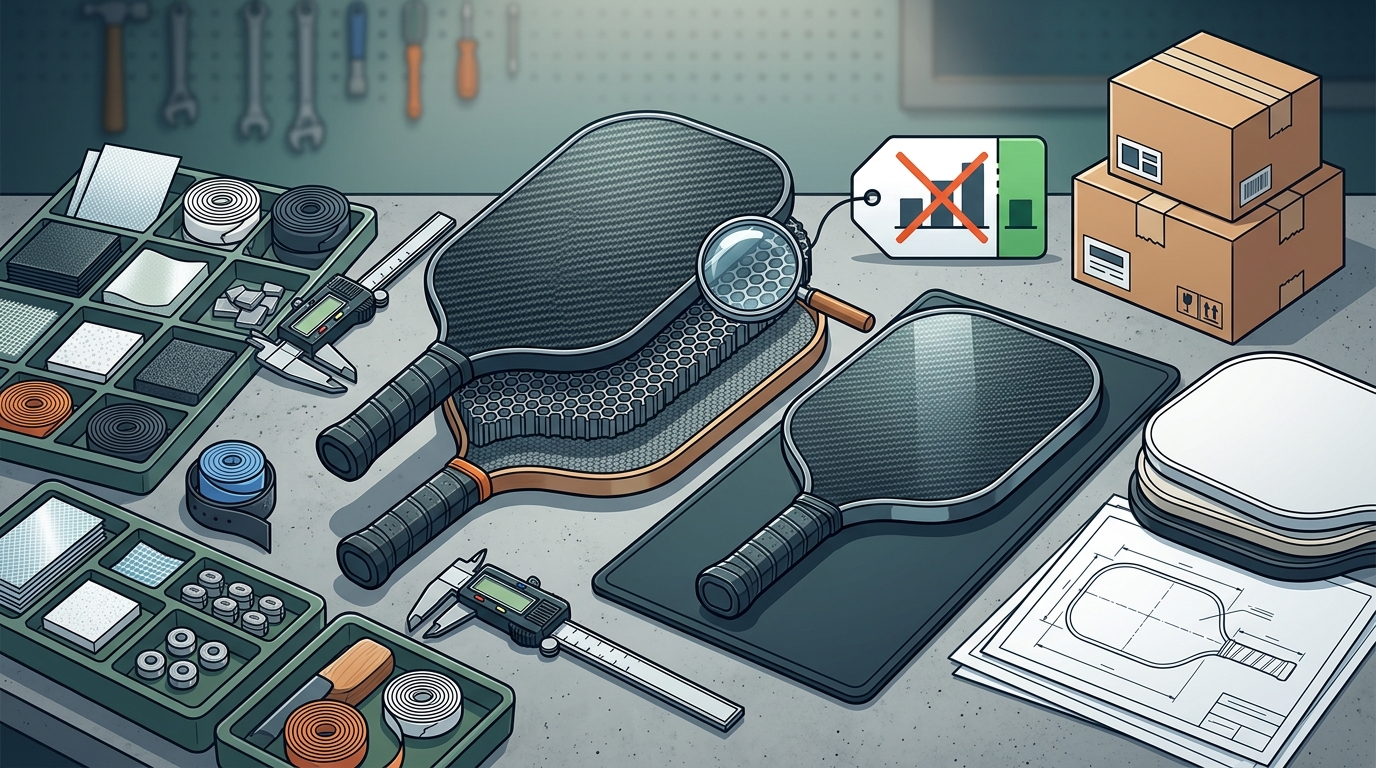
A retail markup is the difference between a product's manufacturing cost and its final selling price, expressed as a multiple. In the pickleball industry, that multiple is significant. According to industry manufacturing data, retail markup on paddles typically runs 4-6x the factory cost. That means a paddle manufactured for $32 can land on shelves at $128 to $192 or more.
This markup covers athlete endorsement deals, premium packaging, distributor margins, and brick-and-mortar shelf space fees. Brands achieving 6x or higher multiples usually invest heavily in celebrity partnerships and aspirational branding. For everyday players, that means you are paying for the logo as much as the carbon fiber.
2026 Paddle Price Tiers Explained
Understanding price tiers helps you decide how much performance you actually need versus how much you are paying for prestige.
Under $100: Solid Beginner Performance
Entry-level paddles in this range use polymer cores and fiberglass or basic carbon fiber faces. They are tournament-legal and perfectly capable for recreational and early intermediate play. Brands like Vatic Pro and 11SIX24 have pushed quality in this bracket significantly.
$100 to $200: The Sweet Spot
This is the range where most players in 2026 get the best return on investment. Advanced materials and construction innovations from 2024 to 2025 have trickled down into this tier, delivering paddles that genuinely compete with premium options. The Godfather Pickleball Performance collection features paddles in this range with sale prices starting at $119, well below original retail.
Above $200: Diminishing Returns
Premium paddles above $200 feature cutting-edge foam cores, Kevlar-carbon hybrids, and small-batch R&D. The most expensive production paddles in 2026, such as the Selkirk LABS Project Boomstik, retail at $333. For competitive tournament players, these incremental gains matter. For everyone else, the performance plateau typically hits in the mid-tier range.
The Direct-to-Consumer Advantage
A direct-to-consumer (DTC) model is a retail approach where brands sell straight to players, cutting out middlemen and their associated costs. This model can eliminate up to 50% of the markup that traditional retailers add. Online specialty stores like Godfather Pickleball's paddle shop curate pro-tested equipment and pass savings along to players, rather than stacking distributor and retail margins.
E-commerce now accounts for roughly 45% of total pickleball paddle sales by unit volume, according to Business Research Insights. That shift has pressured legacy manufacturers to reconsider pricing, especially as more players realize that identical T700 carbon fiber delivers the same performance regardless of the logo on the handle.
Where to Find Pro-Tested Paddles at Fair Prices
Godfather Pickleball specializes in exactly this niche: connecting players with the same equipment professionals use, without the inflated retail price tag. Their catalog includes brands and models co-designed with touring pros.
For example, the Phoenix Pickleball Paddle was co-designed with former WTA Top 30 and PPA pro Tina Pisnik, blending pro-level insight with precision engineering. Their Stria Sport collection features the G1 Pro, pickleball's first-ever signature shoe built in partnership with World #1 pro Gabe Tardio. These are not generic imports relabeled as premium gear. They are athlete-validated products at accessible prices.
If you are looking for additional gear beyond paddles, the full product catalog covers pickleballs, shoes, and accessories to round out your setup.
What to Look for in a Pro-Level Paddle
Core Material and Thickness
A polypropylene honeycomb core is the industry standard for tournament-level paddles. Core thickness matters for feel: 13mm cores deliver more power and pop, while 16mm cores offer better control and a softer touch. Foam-core paddles, increasingly common in 2026, provide enhanced dwell time and reduced vibration.
Face Material
T700 carbon fiber is the most widely used face material in competitive paddles. It provides consistent grit for spin generation and durable surface texture. Fiberglass faces offer more flex and pop but wear faster.
Certification
Always confirm your paddle carries USA Pickleball (USAP) or UPA-A approval. This is non-negotiable for sanctioned tournament play. You can verify approval status on the USA Pickleball official site.
Pro Paddle Price Comparison: Retail vs. Smart Shopping
| Paddle / Category | Typical Full Retail | Smart Shopper Price | Savings |
|---|---|---|---|
| Selkirk LABS Project 007 | $333 | $129 (clearance) | 61% |
| JOOLA Ben Johns Perseus | $249 | $119 (sale) | 52% |
| Godfather Performance Paddles | $249 | $159 (direct) | 36% |
| Mid-Tier DTC Brands (avg.) | $180 | $99-$130 | 28-45% |
| Entry-Level Carbon Fiber | $90 | $49-$70 | 22-46% |
The data shows that shopping through curated online retailers and timing purchases around sales cycles can cut costs by 30% to 60% compared to full MSRP.
Key Takeaways
- Retail markups on pickleball paddles run 4-6x the factory cost, meaning much of what you pay covers branding and distribution, not performance.
- The $100 to $200 price tier delivers the best performance-per-dollar for most players in 2026.
- Direct-to-consumer retailers like Godfather Pickleball eliminate middleman markups and pass savings to you.
- Pro-designed paddles, including models co-created with PPA athletes, are available well below typical retail pricing.
- T700 carbon fiber and polypropylene cores perform the same regardless of the brand name on the paddle.
- E-commerce accounts for nearly 45% of paddle sales, giving online buyers more options and better prices.
- Always verify USAP or UPA-A certification before buying any paddle for competitive play.
Frequently Asked Questions
Why are professional pickleball paddles so expensive?
Most of the cost goes toward athlete endorsements, brand marketing, retail distributor margins, and premium packaging. The actual manufacturing cost of a high-end paddle is typically $28 to $45 at the factory level, with retail multiples of 4-6x applied on top.
Can I get the same paddle a pro uses for less money?
Yes. Many pro-endorsed paddles go on sale between product generations, and curated retailers like Godfather Pickleball stock the same models at reduced prices. Savings of 30% to 60% are common.
What is the best price range for a competitive pickleball paddle?
For most intermediate to advanced players, the $100 to $200 range offers the best balance of materials, construction quality, and performance. This tier now includes foam-core and thermoformed builds that were exclusive to premium paddles just two years ago.
Are cheaper paddles lower quality?
Not necessarily. Many budget and mid-tier paddles are manufactured in the same factories as $250+ models using identical materials. The difference often comes down to branding and endorsement costs, not build quality.
What certifications should I look for?
For local sanctioned tournaments, look for USA Pickleball (USAP) approval. If you plan to compete in pro-level events, you may also need UPA-A certification. Always check the official approved paddle list before purchasing.
Is buying paddles online safe?
Yes, provided you buy from reputable retailers. Established online pickleball shops offer return policies, warranty support, and verified product authenticity. E-commerce now represents nearly half of all paddle sales in the U.S.
How often should I replace my pickleball paddle?
Most competitive players replace paddles every 6 to 12 months as surface grit wears down and affects spin generation. Recreational players can often get 12 to 18 months of consistent performance from a quality paddle.
Does Godfather Pickleball carry pro-designed paddles?
Yes. Godfather Pickleball stocks paddles co-designed with professional athletes, including the Phoenix series developed with PPA pro Tina Pisnik, along with curated selections from top performance brands.
Ready to Play Like a Pro Without Paying Like One?
Browse the full pro-tested paddle collection at Godfather Pickleball and find your next performance upgrade at a price that makes sense. Free UPS ground shipping is available on select models.