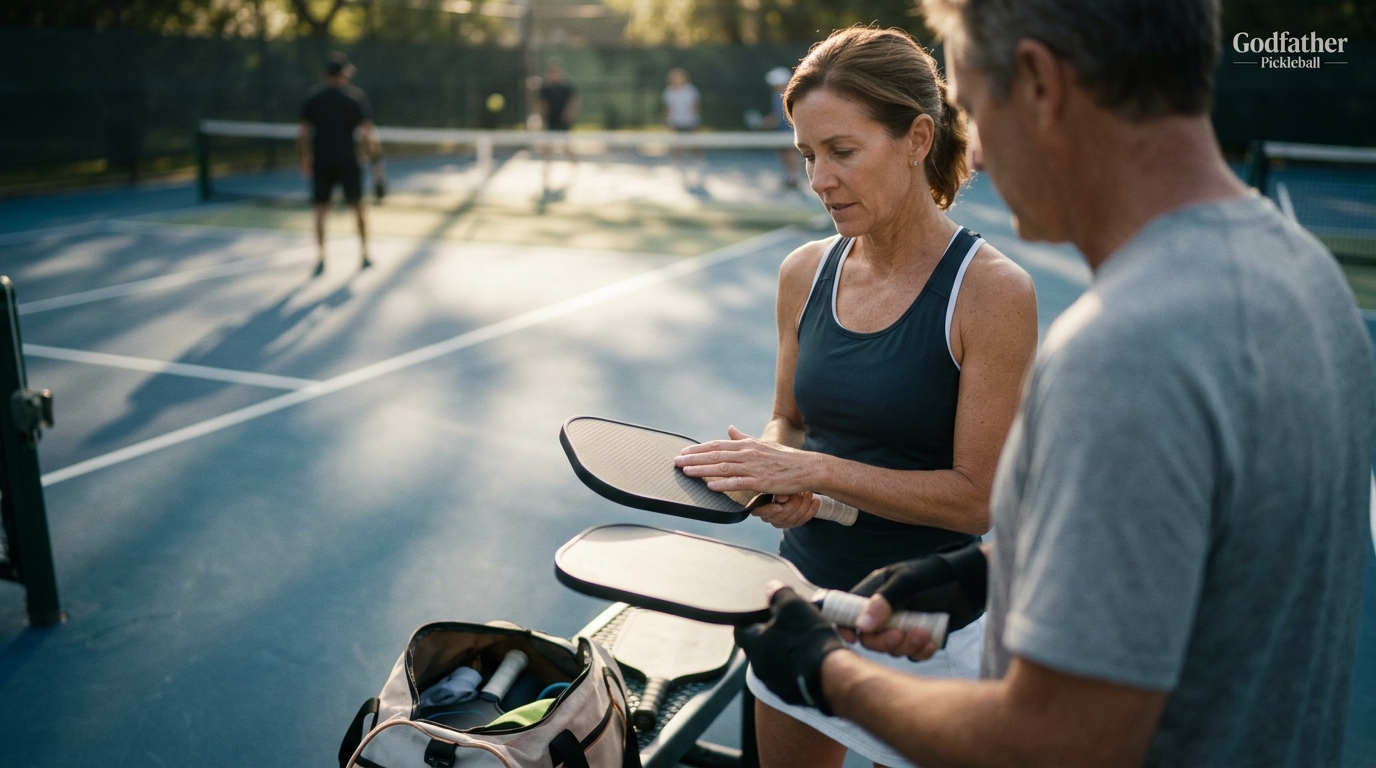
With hundreds of paddles flooding the market in 2026, choosing the right one can feel overwhelming. Every brand claims more power, more spin, and revolutionary tech. But here is the truth: the perfect paddle is the one that matches your game — not the one with the flashiest marketing. This guide from Godfather Pickleball breaks down the eight key features you should evaluate before spending a dollar, so you walk away with a paddle that genuinely elevates your play.
Why Paddle Features Matter More Than Brand Hype
Picking a pickleball paddle based on what is trending is one of the most common mistakes new players make. As the experts at Pickleheads put it, your perfect paddle depends on how you play, not just your budget or what is popular. A paddle that works brilliantly for a 5.0 singles grinder may feel terrible in the hands of a 3.0 doubles player who values soft resets at the kitchen line.
Rather than chasing the latest release, focus on the measurable features below. Understanding each one lets you filter out noise and zero in on the paddle that genuinely complements your strengths while shoring up your weaknesses.
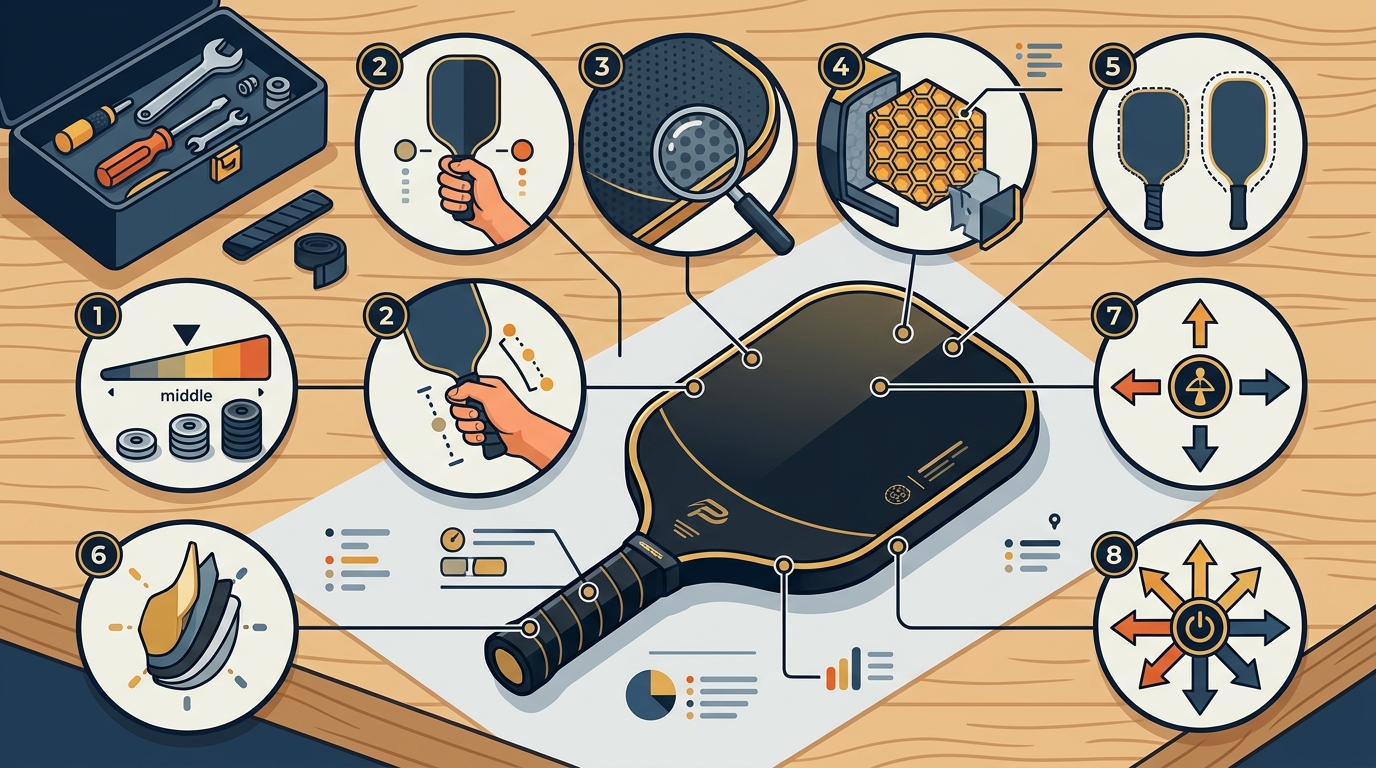
Feature 1 — Weight (Static Weight & Swing Weight)
Weight is one of the largest indicators of whether a paddle is right for you. If a paddle is too light, you sacrifice power and stability; if it is too heavy, you may be slow to get into position and risk injuries like pickleball elbow.
Static Weight Categories
- Lightweight (under 7.3 oz): Maximum maneuverability and fast hand speed at the net. Best for players who generate their own power or have joint concerns.
- Mid-weight (7.3–8.3 oz): The most popular range. Balances control, power, and comfort for the widest range of players.
- Heavyweight (over 8.3 oz): Delivers the most stability and drive power but can fatigue your arm over long sessions.
Why Swing Weight Also Matters
Two paddles can share the same static weight yet feel completely different during play. Swing weight measures how heavy a paddle feels when you actually swing it, factoring in how weight is distributed throughout the paddle. Higher swing weights provide stability and power, while lower swing weights increase maneuverability and reaction time at the kitchen line.
Godfather Tip: If you are trying paddles for the first time, start in the mid-weight range (around 7.8–8.0 oz) and adjust from there based on how your arm feels after extended play.
Feature 2 — Core Material
The core is the hidden engine of every paddle. Sandwiched between the two face surfaces, it determines how much energy transfers from paddle to ball and how much feedback you feel with each shot. There are three primary core types you will encounter:
Polypropylene (Polymer) Honeycomb
By far the most common core in modern pickleball paddles, polypropylene honeycomb cores offer a balanced mix of power, control, and comfort. They produce a softer feel with less vibration and a quieter sound, making them especially good for control-based gameplay. If you are new to the sport or want reliable all-around performance, polymer paddles are a great place to start.
Nomex Honeycomb
Nomex cores are made from a paper-like material dipped in resin and formed into a honeycomb structure. They produce a firm, loud, and fast response. Nomex paddles generate significant pop and speed off the face, making them a fit for aggressive players who like to drive the ball. However, they sacrifice some touch and can transmit more vibration to the arm.
Foam Cores
Foam cores are a newer alternative that gained traction starting in 2025. They absorb vibration effectively and provide a stable, plush feel. Many of the latest Gen 4 paddles use foam constructions, and some of the top-rated paddles in 2026 — including several full-foam models — use complex core designs to manage and redirect ball energy with better control.
Bottom line: For most players, a polypropylene honeycomb core remains the gold standard in 2026, offering the best balance of spin, control, feel, and joint-friendliness.
Feature 3 — Core Thickness
Core thickness has a direct impact on how a paddle plays. Paddles come in a range of thicknesses, typically between 10 mm and 20 mm, and it is not uncommon for the same paddle model to offer two different thickness options.
- Thinner cores (under 13 mm): Deliver more pop and rebound. They feel more offensive and are favored by power-oriented players, though the sweet spot tends to be smaller.
- Standard cores (14–16 mm): The 16 mm thickness is widely regarded as the sweet spot for most players. It balances power, control, and forgiveness effectively.
- Thicker cores (over 16 mm): Distribute force more evenly, making shots more predictable. They offer a larger sweet spot and more forgiveness on off-center hits, which is ideal for players focused on control.
If you are unsure, a 16 mm paddle is the safest starting point. It provides enough pop for drives while keeping soft shots manageable at the kitchen.
Feature 4 — Face (Surface) Material
The paddle face is the surface that directly contacts the ball. It determines two critical performance parameters: spin potential and pop. The three main face materials are:
Carbon Fiber
Carbon fiber — especially T700 raw carbon — is the dominant face material in mid-range and premium paddles. Its textured surface grabs the ball for excellent spin generation, while still providing a crisp, controlled feel. In 2026, carbon fiber faces are the standard equipment among competitive players.
Fiberglass (Composite)
Fiberglass faces flex slightly more on contact, producing a trampoline-like effect that boosts power. They are common on budget-friendly and power-oriented paddles. However, fiberglass typically offers less spin than raw carbon fiber.
Graphite
Graphite faces are thin, lightweight, and deliver a consistent, controlled feel. They are less common now than carbon fiber but still appear on touch-oriented paddles designed for players who prioritize placement over power.
Godfather Tip: If spin is a priority — and it should be for anyone playing at a 3.5 level or above — look for a raw carbon fiber face. You will feel the difference immediately on serves and third-shot drops.
Feature 5 — Paddle Shape
Shape affects reach, sweet spot size, control, and maneuverability. There are three main paddle shapes available today, and each suits a different style of play:
Widebody
Widebody paddles offer the largest sweet spot and the most forgiveness. They are great for doubles players, control-focused players, and beginners who want easier resets and cleaner contact.
Hybrid
Hybrid paddles split the difference between widebody and elongated designs. They balance reach, sweet spot, power, control, and hand speed, making them the safest choice for most intermediate and advanced players.
Elongated
Elongated paddles stretch to 16 inches or longer, adding reach for groundstrokes and overhead shots. They generate more power and spin but usually come with a smaller sweet spot and slightly slower hands. Former tennis players and singles players often gravitate toward elongated designs.
The good news is that the performance gap between shapes has narrowed significantly in modern paddle design. Your choice should come down to which aspects matter most to your game.
Feature 6 — Grip Size & Handle Length
Grip comfort directly affects your ability to maintain control and avoid injury over long playing sessions. Two dimensions matter here:
Grip Circumference
Most paddles offer grip circumferences between 4 inches and 4.5 inches. A grip that is too small forces you to squeeze harder, increasing fatigue and strain. A grip that is too large limits wrist action and finesse. A simple test: hold the paddle with your dominant hand — you should be able to fit the index finger of your other hand in the gap between your fingertips and palm.
Handle Length
Standard grip lengths typically range between 4.5 and 5.25 inches. Longer handles (5 inches and above) allow for two-handed backhands and generate more leverage on groundstrokes. Shorter handles maximize face area and sweet spot size. Former tennis players who rely on a two-handed backhand should pay special attention to handle length.
Feature 7 — Sweet Spot Size & Forgiveness
The sweet spot is the area on the paddle face that produces the most consistent, powerful, and controlled shots. Its size is influenced by shape, core thickness, and overall construction.
Wider paddles with thicker cores generally have the largest sweet spots. Elongated paddles push the sweet spot slightly higher on the face. If you frequently mis-hit or are still developing consistent contact, prioritizing a large sweet spot over raw power will improve your game faster.
Twist weight is another metric worth checking. A higher twist weight means the paddle resists rotation on off-center hits, offering more stability and consistent performance even when you do not strike the ball perfectly.
Feature 8 — Budget & Value Tiers
Price does not always equal performance. Quality paddles exist at every price point, so focus on matching features to your skill level rather than simply spending more. Here is a general breakdown:
- Entry level (under $75): Good for casual players and newcomers testing the sport. Expect basic composite construction and polymer cores.
- Mid-range ($100–$200): This is the sweet spot for most serious players. You will find advanced materials like T700 carbon fiber and reliable 16 mm polymer or early-generation thermoformed cores.
- Premium ($200+): Cutting-edge thermoforming, unibody construction, foam-injected edges, and exotic materials like Kevlar. Best for competitive players with specific performance needs.
A $200 power paddle in a beginner's hands often performs worse than a $100 control paddle that matches their skill level. Always match the paddle to the player, not the price tag.
Matching Features to Your Play Style
Understanding your own game is the single best way to narrow down your options. Here is a quick reference for three common player profiles:
The Control Player (Soft Hands at the Net)
You value precision, placement, and patience. Look for a thicker core (16 mm), a raw carbon fiber face for feel, and a standard or hybrid shape for a larger sweet spot. A mid-weight paddle in the 7.6–8.0 oz range will give you stability without sacrificing hand speed.
The Power Player (Aggressive Drives & Counters)
You want to end points fast with punishing drives and counters. Consider a thinner core (14 mm or less), an elongated or hybrid shape, and a slightly heavier build. Fiberglass or carbon fiber faces both work well here, depending on whether you also prioritize spin.
The All-Court Player (Balanced & Adaptive)
You adapt shot by shot and want a paddle that does everything well. A 16 mm hybrid paddle with a carbon fiber face in mid-weight is the safest choice. This configuration gives you enough pop for drives while keeping dinks and drops manageable.
Key Takeaways
- Weight is personal. Start mid-range and adjust based on comfort and arm health.
- Polypropylene honeycomb cores remain the best all-around choice for most players in 2026.
- 16 mm core thickness offers the ideal balance of power and control for the majority of skill levels.
- Carbon fiber faces (especially T700) deliver the best spin and feel at mid-range and premium price points.
- Hybrid paddle shapes are the safest pick if you are unsure of your style.
- Grip size and handle length directly affect comfort, injury prevention, and shot variety.
- Budget wisely: Match features to skill level, not hype.
- Demo before you buy whenever possible — many local clubs and retailers offer try-before-you-buy programs.
Frequently Asked Questions
What is the most important feature when buying a pickleball paddle?
Weight and shape are the two primary non-negotiables. If either is wrong for your game, no amount of marketing or advanced materials will make the paddle work for you. Start by finding a comfortable weight range and a shape that fits your play style, then fine-tune core thickness, face material, and grip size.
Is a more expensive pickleball paddle always better?
No. Expensive paddles offer specific performance characteristics that benefit players with the skill to leverage them. A $200 power paddle in a beginner's hands often performs worse than a $100 control paddle matched to their level. Focus on feature-to-skill alignment, not price.
What core thickness should I choose?
For most players, 16 mm is the recommended starting point. It offers a balanced blend of power, control, and a forgiving sweet spot. Power-focused players may prefer 14 mm or thinner for extra pop, while control-oriented players sometimes go thicker for added touch.
What is the difference between carbon fiber and fiberglass paddle faces?
Carbon fiber faces offer superior spin and a crisper, more controlled feel. Fiberglass flexes more on impact, producing a trampoline effect that adds power. If spin and precision matter to you, choose carbon fiber. If you want extra pop without generating your own power, fiberglass may be the better fit.
What paddle shape is best for beginners?
Widebody or standard shapes provide the largest sweet spot and the most forgiveness, making them ideal for newer players who are still developing consistent contact. As your game improves, you can experiment with hybrid or elongated shapes.
Where can I find pro-tested pickleball paddles?
Godfather Pickleball at godfatherpickleball.com offers a curated selection of pro-tested paddles, shoes, and gear for players of all levels. Every product is vetted for quality so you can shop with confidence.