
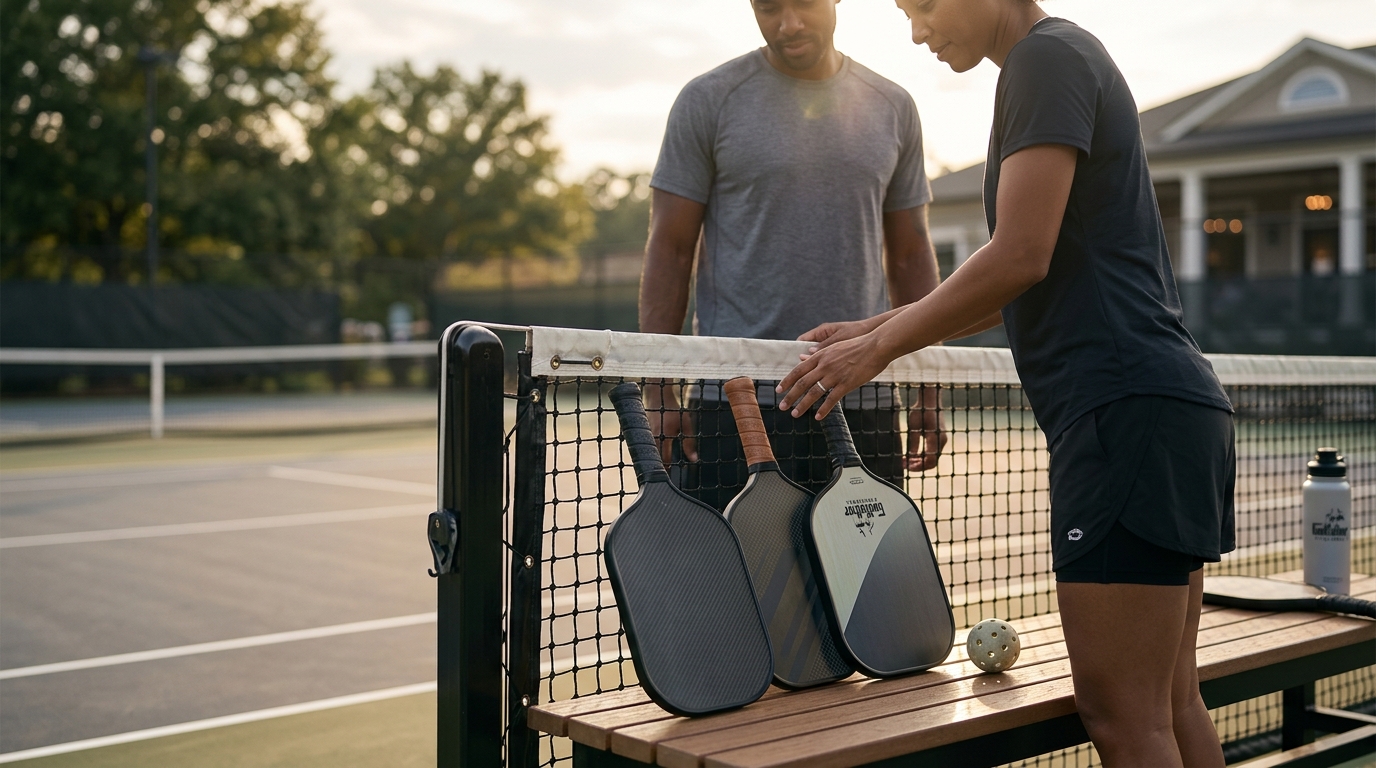
Walking into a pro shop or browsing online in 2026, you will encounter more paddle options than at any point in the sport’s history. More than 150 brands now compete for court space, foam cores have reshaped the mid-to-premium segment, and new testing standards are redefining what “legal” even means. This ultimate guide from Godfather Pickleball gives you a single checklist covering every feature that matters—so you can stop guessing and start buying with confidence.
1. Core Material: The Engine of Your Paddle
The core is the internal structure sandwiched between the two face layers, and it directly controls feel, power, and vibration. Here are the primary options you’ll encounter:
Polymer (Polypropylene) Honeycomb
This is the dominant core in pickleball. Polymer cores use a plastic honeycomb structure that offers a balanced mix of power, control, and comfort while producing less vibration and a quieter sound than alternatives. If you are new to the sport or looking for reliable all-around performance, polymer paddles are an excellent starting point because they are forgiving and easy to manage.
Foam Core (Gen-4)
The biggest core innovation of 2025–2026 is the full-foam paddle. Foam cores offer superior vibration dampening, increased durability, and often a larger sweet spot compared to traditional honeycomb. What began as a 2024–2025 experiment is now baseline at the $150-and-up price point, with brands like Bread & Butter, CRBN, and Honolulu leading the charge.
Nomex
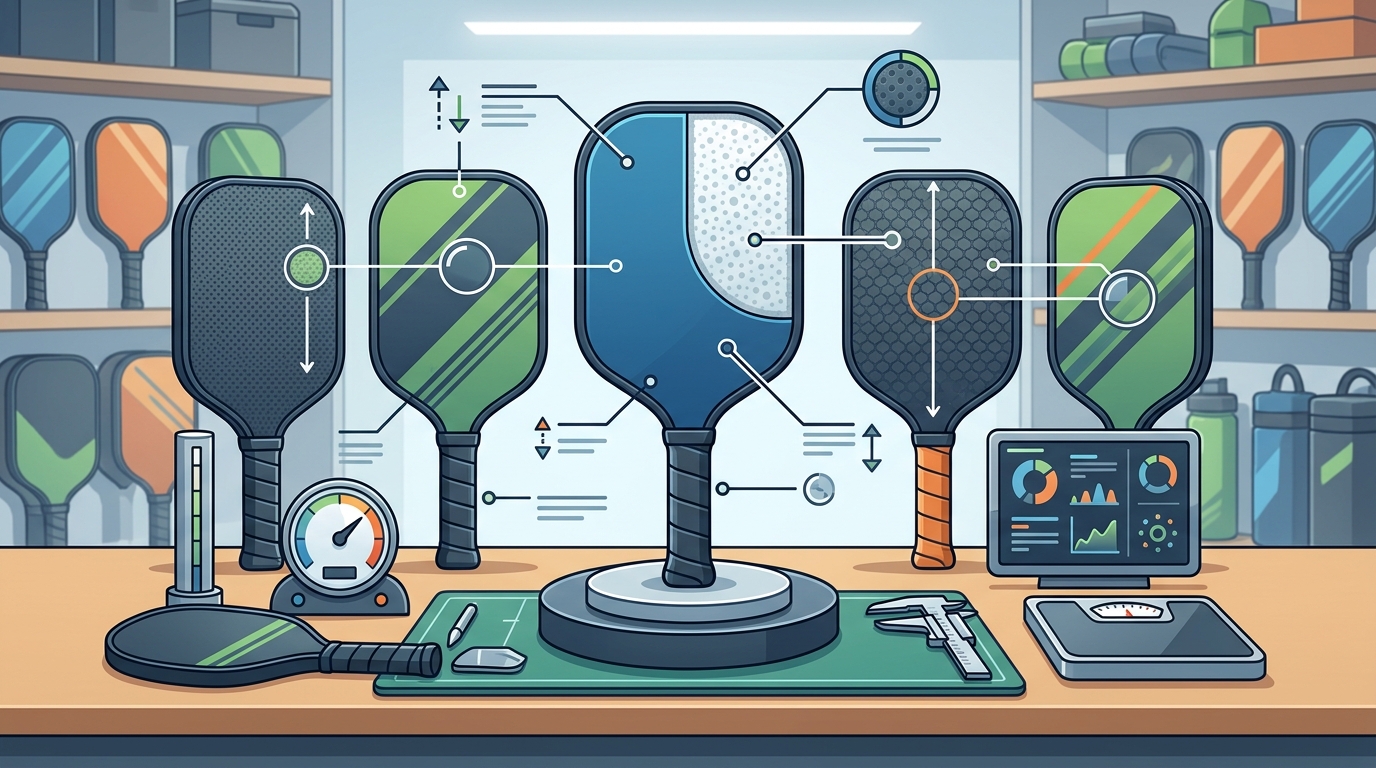
Nomex was the first high-performance core material used in pickleball. Made from a paper-like substance formed into a tight honeycomb and dipped in resin, Nomex cores are extremely hard, lightweight, and loud. They generate significant power but offer less control and more vibration than polymer. You will mostly find Nomex in legacy models like the Onix Z5.
Aluminum
Aluminum honeycomb cores are lightweight and provide excellent touch and ball placement. However, they sacrifice power and are less common in modern performance paddles. They can be a consideration for players managing wrist or elbow issues who prioritize finesse over pop.
2. Core Thickness & Cell Size
Beyond the material itself, how thick the core is and how large its honeycomb cells are both influence playability in meaningful ways.
Thickness
- Thicker cores (14–16 mm): Offer more control, a softer feel, a larger sweet spot, and better shock absorption. Ideal for players who prioritize precision, dinking, and resets.
- Thinner cores (10–13 mm): Deliver a firmer feel, more pop, and a smaller sweet spot. Suited to aggressive players who rely on hard drives and put-aways.
Cell Size
Honeycomb cell size further fine-tunes performance. Larger cells (around 10 mm) produce more power and rebound but a smaller sweet spot. Smaller cells (around 6 mm) deliver less raw power but a more controlled, consistent bounce and denser feel. The most common cell size sits at approximately 8 mm, striking a middle ground that works for most playing styles.
3. Face Material: Where Ball Meets Paddle
The face is the exterior surface you see and the part that makes contact with the ball. Material choice here affects power, spin, and touch.
Carbon Fiber
Carbon fiber is the premier choice for control and feel in 2026. Raw carbon fiber faces—especially those using high-grade materials like Toray T700—provide a gritty texture that grips the ball and generates substantial spin. Carbon fiber paddles are favored by advanced and competitive players.
Fiberglass (Composite)
Fiberglass faces flex more on contact, producing additional power and a slightly trampolining effect. They are popular with players who want extra pop without relying entirely on swing speed. Control is somewhat reduced compared to carbon fiber, but the trade-off suits many intermediate players.
Graphite
Graphite paddle faces are among the thinnest and lightest options available. They deliver consistent energy transfer and a tactile feel that rewards finesse over force. Graphite is considered best suited for players who rely on touch rather than raw power.
4. Surface Texture & Spin Potential
In 2026, surface grit and durability have become major differentiators among paddles. Ultra-high-friction carbon or raw composite surfaces are engineered to maximize spin without relying on coatings that wear down quickly. When evaluating a paddle’s spin potential, consider two things:
- Initial grit level: How textured is the face out of the box? Rougher surfaces grab the ball more effectively for topspin serves, rolls, and slice shots.
- Grit longevity: Some paddles lose spin capability within weeks of heavy play. Almost all premium paddles in 2026 now feature longer-lasting surface textures, making durability a baseline expectation rather than a luxury.
5. Construction Method: Thermoformed vs. Traditional
How a paddle is assembled matters just as much as what it is made from.
Thermoformed / Unibody
Thermoforming uses heat and pressure to mold the paddle as one continuous piece, often injecting foam along the edges and fusing layers together. This unibody construction creates a more stable, durable paddle with a larger and more consistent sweet spot. It is a hallmark of premium paddle technology in 2026 and is found across top-tier lineups from JOOLA, Bread & Butter, Six Zero, and others.
Traditional Layup
In a traditional build, the core is cut to shape and face sheets are glued to each side. This approach is less expensive and still produces quality paddles, but the sweet spot is typically smaller and the overall structure less rigid than thermoformed designs.
6. Paddle Shape: Standard, Elongated, or Hybrid
USA Pickleball rules cap the combined length and width of a paddle at 24 inches. Within those limits, three primary shapes have emerged:
- Standard (approx. 16″ × 8″): The widest hitting area and largest sweet spot. Excellent for doubles, beginners, and players who value forgiveness.
- Elongated (approx. 16.5″ × 7.5″): A narrower body with additional reach and leverage for power. Preferred by singles players and those who attack from the baseline, though the sweet spot is smaller.
- Hybrid (approx. 16.25″ × 7.5–7.7″): Splits the difference, giving moderate extra reach without sacrificing too much face width. A versatile option for all-court players.
7. Weight & Swing Weight
Static weight is the number on the scale, but swing weight—how heavy the paddle feels during a stroke—often matters more.
Static Weight Categories
- Lightweight (under 7.5 oz): Quick hands, fast reactions at the kitchen line, and reduced fatigue. Best for defensive and finesse players or those managing joint issues.
- Midweight (7.5–8.4 oz): The sweet spot for most recreational and competitive players. Balances power with maneuverability.
- Heavyweight (8.5 oz+): Maximum driving power from the baseline but harder to maneuver in fast exchanges and more taxing on the arm.
Swing Weight
Two paddles with identical static weight can feel completely different depending on how that weight is distributed. Head-heavy paddles produce more power on full swings but slower hand speed; handle-heavy paddles move faster at the net. Look for published swing-weight numbers (typically between 105 and 125) when comparing models side by side. Players can fine-tune balance with lead tape applied to specific zones of the paddle.
8. Grip Size & Handle Length
Grip Circumference
Most adult pickleball paddles range from 4.0 to 4.5 inches in grip circumference, with 4.25 inches being the most common size shipped. Choosing the correct circumference reduces strain on the hand, wrist, and elbow while giving better control over every shot. A quick at-home test: measure from the middle crease of your dominant palm to the tip of your ring finger—that measurement approximates your ideal grip circumference.
A grip that is too small forces you to squeeze harder, increasing forearm tension and contributing to pickleball elbow over time. A grip that is too large restricts wrist mobility, reduces spin potential, and limits quick grip changes during fast exchanges. If your grip is slightly too small, adding an overgrip is the simplest fix.
Handle Length
Standard-shape paddles typically have handle lengths between 4.5 and 5.25 inches. Elongated paddles often feature handles of 5.5 inches or longer, providing room for two-handed backhands. If you use a two-handed backhand regularly, prioritize a handle length of at least 5.5 inches.
9. Compliance & Certification Standards
If you plan to play in sanctioned tournaments, your paddle must meet the governing body’s regulations. In 2026, the landscape includes USA Pickleball’s approved paddle list and newer testing standards like PEF (Paddle Exit Factor) limits. The best 2026 paddles maximize power within the regulated ceiling through smarter core engineering and face construction rather than brute force. Before purchasing, verify that the paddle is listed on the current approved equipment list if competition play is in your future.
10. Price Tiers: What You Actually Get
Understanding price tiers helps you make the most of your budget:
- Under $100: Solid beginner options with polymer cores and composite faces. Perfectly playable and a smart entry point. The performance gap between this tier and premium paddles has narrowed significantly in 2026.
- $100–$200: The sweet spot for most players. Advanced materials, thermoformed construction, and foam-core options are increasingly available here. This range offers the best overall value.
- $200+: Cutting-edge materials, proprietary core designs, and tour-level refinement. The incremental gains matter for competitive players, but recreational and intermediate players often find performance plateaus beyond the mid-tier range.
Key Takeaways
- Start with core material. Polymer honeycomb remains the safest all-around choice; foam cores are the future for players willing to invest $150+.
- Match thickness to your style. Thicker cores (14–16 mm) reward control players; thinner cores (10–13 mm) reward power players.
- Carbon fiber faces dominate 2026 for spin and control. Fiberglass remains a strong power alternative.
- Surface grit durability is the new battleground. Ask how long the texture lasts, not just how aggressive it feels on day one.
- Thermoformed construction delivers a bigger, more consistent sweet spot but costs more.
- Shape follows function. Standard for doubles and forgiveness, elongated for singles and reach, hybrid for versatility.
- Get your grip size right. It is the cheapest and most impactful upgrade you can make—measure your hand before you buy.
- Check compliance before tournament play. Regulations are tightening in 2026.
- The $100–$200 range delivers the best value for most players right now.
- Demo before you commit. Specs tell part of the story; feel on the court tells the rest.
Frequently Asked Questions
What is the most important feature of a pickleball paddle?
Core material and core thickness have the greatest impact on overall feel, power, and control. The core dictates how the paddle absorbs impact, generates rebound, and transmits vibration to your hand. Start your evaluation there, then layer in face material, shape, and weight based on your playing style.
Is a foam core paddle better than a polymer honeycomb paddle?
Foam cores offer superior vibration dampening, a larger sweet spot, and more consistent feel across the face. Polymer honeycomb cores remain more affordable and provide a familiar, responsive feel that many players prefer. Neither is objectively better—the choice depends on your budget, skill level, and whether you value plush touch or crisp feedback.
What paddle weight should a beginner choose?
Most beginners do well with a midweight paddle in the 7.5–8.0 oz range. This weight provides enough mass for stable shots without causing rapid fatigue. As you develop your stroke mechanics and understand your playing style, you can adjust up or down.
How do I know what grip size I need?
Measure from the middle crease of your dominant palm to the tip of your ring finger. That measurement in inches closely approximates your ideal grip circumference. Most adults land between 4.0 and 4.25 inches. When in doubt, go slightly smaller—you can always add an overgrip to increase circumference.
Does paddle shape really affect my game?
Yes. Standard-shape paddles offer a wider face and larger sweet spot for better forgiveness, making them ideal for doubles and beginners. Elongated paddles provide extra reach and power leverage but reduce the sweet spot. Choose shape based on whether you prioritize net play and consistency or baseline power and reach.
What does thermoformed mean for a pickleball paddle?
Thermoforming is a construction process that uses heat and pressure to mold the paddle as a single continuous piece. This unibody approach typically injects foam along the edges and fuses the layers, creating a more rigid, durable structure with a larger, more uniform sweet spot compared to traditionally glued paddles.
Are expensive paddles worth it?
Paddles above $200 feature cutting-edge materials and specialized construction that provide incremental performance gains meaningful at the competitive level. However, the $100–$200 tier now delivers advanced materials and construction quality that was considered premium just 18 months ago, making it the best value range for most recreational and intermediate players.
Where can I find pro-tested paddles and gear?
Godfather Pickleball curates a selection of pro-tested paddles, shoes, and accessories for players of all levels. Every product is vetted for quality so you can shop with confidence and focus on improving your game.
Ready to Choose Your Next Paddle?
Use this checklist as your personal buying framework. Print it, save it, or pull it up on your phone the next time you are comparing models. And when you are ready to shop, Godfather Pickleball has the pro-tested paddles, shoes, and gear to match every item on your list.