Pickleball has evolved from a casual backyard pastime into a high-stakes professional sport. The average recreational player hits the ball with moderate force, but elite competitors generate spin rates and ball speeds that demand specialized equipment. According to recent industry data, the surface material of a pickleball paddle directly influences control, power, and spin potential by up to 30%. This statistic highlights why understanding paddle construction is no longer optional for serious players. The "concrete" performance of a paddle refers to its durability, consistency, and ability to maintain structural integrity under high-impact stress. This guide explores how surface materials like carbon fiber and fiberglass dictate gameplay, helping you choose the right tool for your level.
Understanding Paddle Surface Materials
The face of a pickleball paddle is the primary interface between your hand and the ball. The material used determines the "concrete" performance characteristics, including grip, pop, and wear resistance. Historically, wood paddles dominated the early days of the sport. Wood is dense and durable but lacks the lightweight flexibility required for modern spin-heavy play. Today, composite materials have replaced wood as the standard for competitive play.
Composite paddles typically feature a core made of polymer honeycomb or aluminum, surrounded by a face material. The face material is where the magic happens. The two most common options are fiberglass and carbon fiber. Each offers distinct advantages depending on your playing style. Understanding the technical differences between these materials is essential for making an informed purchase.
Carbon Fiber vs. Fiberglass: The Core Difference
Carbon fiber and fiberglass are the two dominant surface materials in high-performance pickleball. The choice between them affects the paddle's stiffness, weight distribution, and spin potential.
Carbon Fiber: Precision and Spin
Carbon fiber is a high-strength, lightweight material originally developed for aerospace engineering. In pickleball, it is prized for its stiffness and ability to create a textured surface that grips the ball. This texture allows players to generate significant topspin and slice, crucial for controlling the ball's trajectory. Carbon fiber paddles are generally more expensive due to the cost of raw materials and manufacturing complexity.
According to materials science principles, carbon fiber has a higher tensile strength than fiberglass. This means it can withstand greater stress without deforming. For players who rely on precision shots, such as dinks and drops, carbon fiber provides the necessary feedback and control. The Gabe Tardio collection features paddles engineered with premium carbon faces to maximize this precision.
Fiberglass: Power and Flexibility
Fiberglass is more flexible than carbon fiber. This flexibility allows the paddle face to flex upon impact, storing energy and releasing it as power. This "trampoline effect" is beneficial for players who prefer a more powerful game, particularly on drives and smashes. Fiberglass paddles are often lighter and more affordable than their carbon counterparts.
However, fiberglass may wear down faster than carbon fiber under heavy spin conditions. The surface texture can smooth out over time, reducing spin potential. Despite this, fiberglass remains a popular choice for intermediate players seeking a balance of power and affordability. The Mari Humberg paddle line demonstrates how fiberglass can be optimized for both power and durability.
Durability and Longevity on the Court
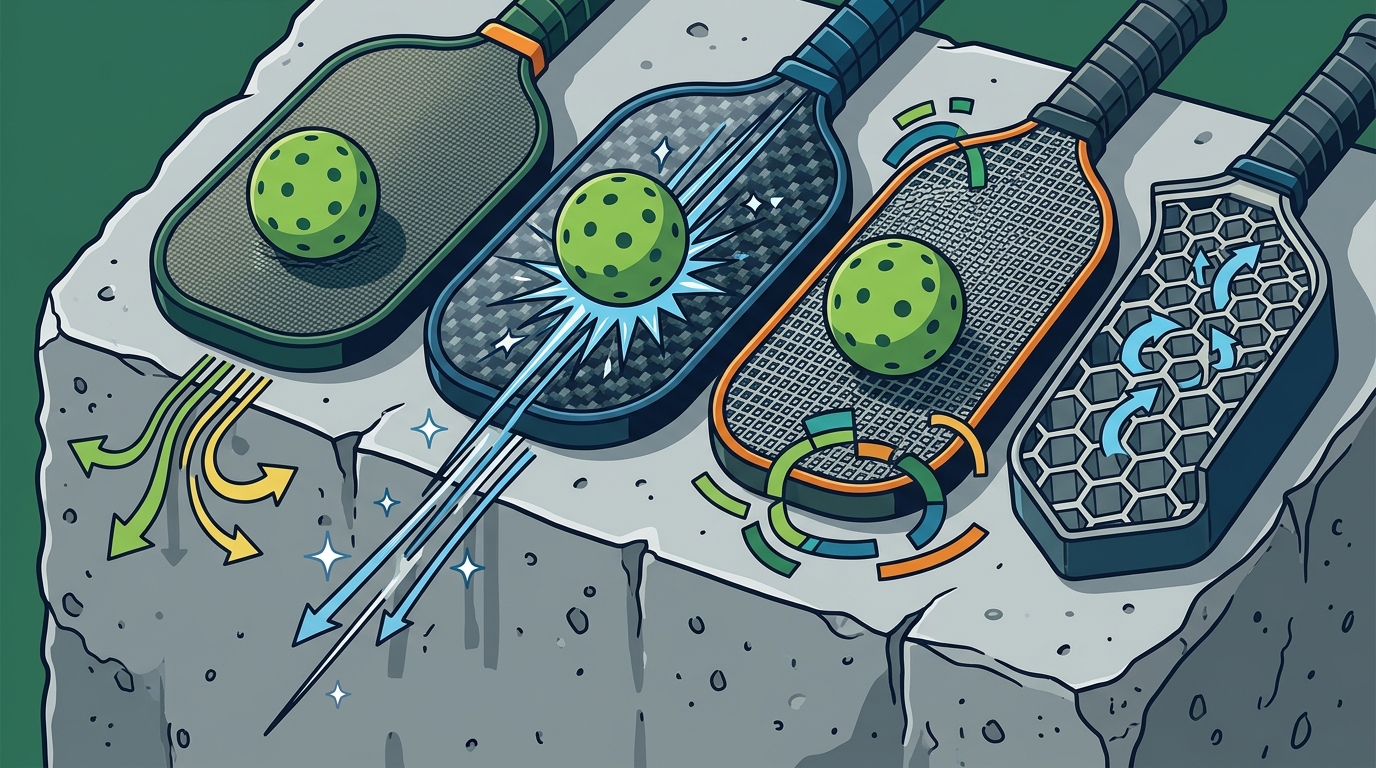
"Concrete performance" also refers to how well a paddle holds up over time. Pickleball is a high-impact sport, and paddles are subjected to constant friction against the court surface, the ball, and other paddles. Durability is determined by the quality of the core material and the bonding process.
Polymer honeycomb cores are the industry standard for their balance of weight and durability. They provide a consistent feel and resist cracking better than aluminum cores. However, the surface material is the first line of defense. Carbon fiber surfaces are generally more resistant to abrasion than fiberglass. This means a carbon paddle will maintain its spin characteristics longer than a fiberglass paddle under heavy use.
Environmental factors also play a role. Extreme heat or cold can affect the adhesive bonds within the paddle. High-quality manufacturers use advanced bonding techniques to ensure the face remains securely attached to the core. This is a key differentiator between premium brands and budget options. The Pro Tips blog offers additional insights on maintaining your paddle's longevity.
How Pros Select Their Paddles
Professional players have access to the latest technology and materials. They test dozens of paddles before committing to one. Their selection criteria focus on consistency, feel, and performance under pressure. Pros look for paddles that offer a predictable response on every shot.
The Godfather Pickleball Agency represents over 100 elite players. This network provides real-world data on how different paddles perform in tournament conditions. By analyzing this data, the agency can identify which materials and designs offer the best performance. This approach eliminates the guesswork for amateur players.
When selecting a paddle, consider your playing style. If you rely on spin and control, a carbon fiber paddle is likely the best choice. If you prefer power and a softer feel, fiberglass may be more suitable. The Kate Fahey collection showcases paddles designed for specific player profiles, ensuring a tailored fit for your game.
Paddle Comparison: Godfather vs. Premium Brands
One of the most compelling arguments for choosing Godfather Pickleball is the value proposition. Many premium brands charge high prices due to marketing costs and retail markups. Godfather Pickleball eliminates these overheads by sourcing the same high-quality materials directly.
| Feature | Godfather Pickleball | Premium Brand A | Premium Brand B |
|---|---|---|---|
| Surface Material | Toray T700 Carbon | T700 Carbon | Carbon Composite |
| Core Material | Polymer Honeycomb | Polymer | Gen 4 TruFoam |
| Core Thickness | 14mm | 16mm | 14mm |
| Weight | 7.9–8.1 oz | 8.0–8.4 oz | 7.8–8.2 oz |
| Trial Period | 60 Days | 30 Days | 30 Days |
| Price | $159 | $250 | $280 |
As shown in the table, Godfather Pickleball offers the same core materials and similar weight distributions as brands charging significantly more. The 60-day trial period further reduces the risk of purchase, allowing you to test the "concrete performance" of the paddle in your own games.
Key Takeaways
- Surface material directly impacts spin, power, and control. Carbon fiber offers precision, while fiberglass provides power.
- Toray T700 carbon fiber is the industry standard for high-performance paddles, offering superior strength and durability.
- Polymer honeycomb cores provide the best balance of weight and consistency for competitive play.
- Godfather Pickleball uses the same materials as premium brands but eliminates retail markups, offering paddles for $159.
- The 60-day risk-free trial allows players to test performance without financial commitment.
- Professional player feedback is critical for identifying the best paddle designs for different playing styles.
- Durability is influenced by both surface material quality and the bonding process used in manufacturing.
Frequently Asked Questions
What is the best surface material for spin?
Carbon fiber is generally considered the best surface material for generating spin. Its stiffness and ability to be textured allow for greater ball grip and control. The Pablo Tellez paddle is designed with this in mind.
How long does a pickleball paddle last?
With regular use, a high-quality carbon fiber paddle can last between 12 to 24 months. Fiberglass paddles may wear down faster due to surface abrasion. Proper storage and care can extend the lifespan of any paddle.
Is a 14mm or 16mm core better?
A 14mm core offers more control and a softer feel, ideal for players who spend time at the kitchen line. A 16mm core provides more power and a larger sweet spot, better for baseline players. The choice depends on your playing style.
Why are Godfather paddles cheaper than other brands?
Godfather Pickleball eliminates the overhead costs associated with traditional retail and marketing. By sourcing directly from manufacturers and selling online, they can offer the same high-quality materials at a lower price point.
Can I return my paddle if it doesn't perform well?
Yes, Godfather Pickleball offers a 60-day risk-free trial. If the paddle does not meet your performance expectations, you can return it for a full refund. This policy ensures you can test the "concrete performance" of the paddle in real-game conditions.
What is the weight range for competitive paddles?
Most competitive paddles weigh between 7.8 and 8.4 ounces. Lighter paddles offer faster hand speed, while heavier paddles provide more power and stability. Godfather paddles typically weigh between 7.9 and 8.1 ounces, offering a balanced feel.
How does the core material affect play?
The core material determines the paddle's feel and responsiveness. Polymer honeycomb cores are lightweight and durable, providing a consistent response. Aluminum cores are heavier and less common in high-end paddles. The Gabe Tardio paddle features a polymer honeycomb core for optimal performance.
Elevate Your Game Today
Understanding "concrete performance" is the first step to improving your pickleball game. By choosing a paddle with the right surface material and core construction, you can enhance your spin, power, and control. Godfather Pickleball offers premium paddles at an unbeatable price, backed by a 60-day risk-free trial. Visit our shop page to explore the full collection and find the perfect paddle for your game.