
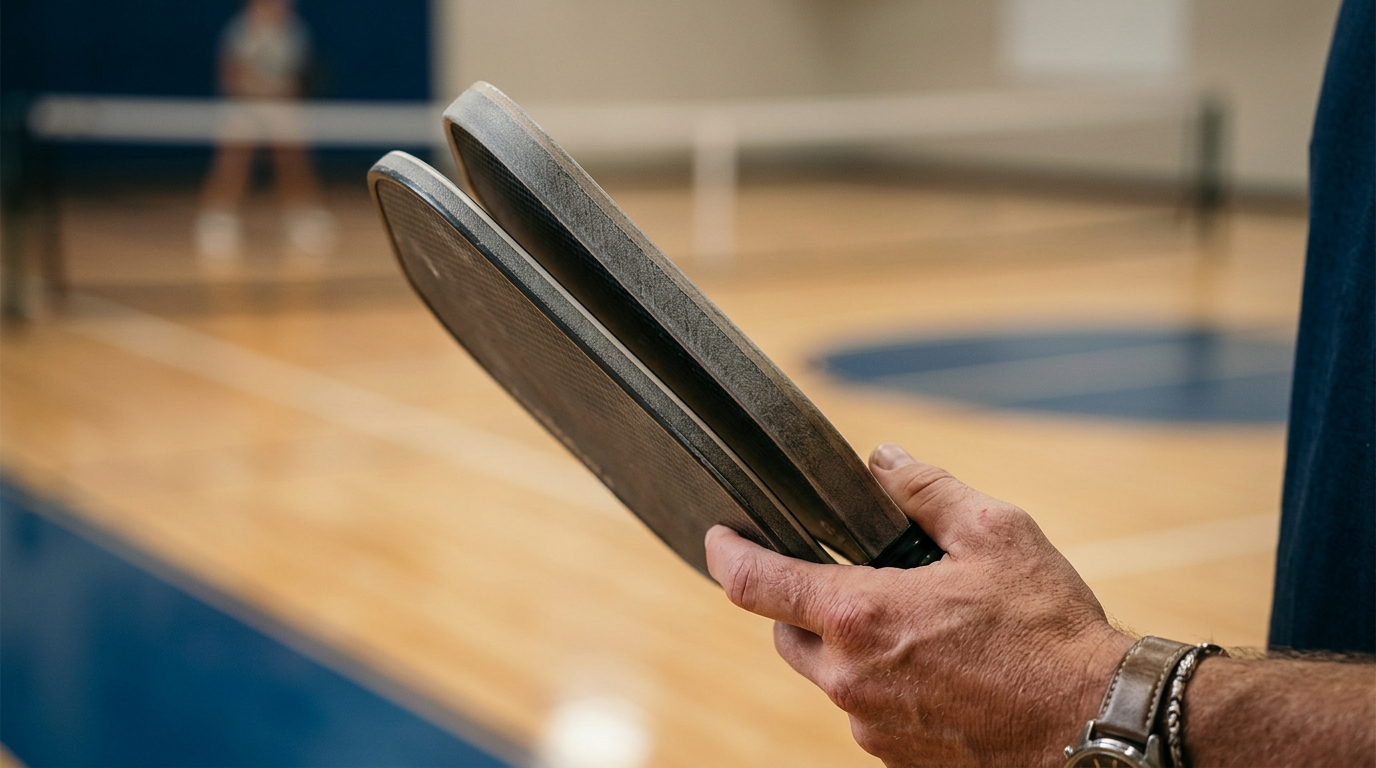
Pickleball paddle thickness is the measurement of the core material between the face and back of the paddle, typically ranging from 16mm to 19mm. This dimension directly dictates the balance between power, control, and durability. Thinner paddles offer more control and spin, while thicker paddles provide greater power and a larger sweet spot. At Godfather Pickleball, we curate pro-tested equipment to help you find the exact thickness that matches your playing style.
The Physics of Paddle Core Thickness
Paddle thickness is the physical depth of the honeycomb or polymer core inside the paddle. This measurement is the single most critical factor in determining how the paddle feels in your hand. A thicker core generally means a heavier paddle, which requires more energy to swing but generates more momentum on impact. Conversely, a thinner core results in a lighter paddle that is easier to maneuver but may lack raw power.
The relationship between thickness and performance is not linear. It is a trade-off. When you increase the thickness from 16mm to 19mm, you are adding mass. This added mass increases the moment of inertia, making the paddle feel heavier in the wrist. However, this mass also increases the kinetic energy transferred to the ball. For a player who relies on placement and finesse, this extra weight can be a hindrance. For a player who relies on drive shots, it is an asset.
Understanding this physics is essential before you buy. You are not just buying a tool; you are buying a specific mechanical property. The core material, such as Nomex honeycomb or polymer, interacts with the thickness to create the final feel. A 19mm Nomex core feels different than a 19mm polymer core, but the thickness remains the primary driver of the power-to-control ratio.
16mm Paddles: The Control and Spin Specialist
The primary advantage of a 16mm core is the feel. Because the core is thinner, the paddle face is more flexible. This flexibility allows the ball to dwell on the face slightly longer, giving the player more time to adjust the angle and spin. This is why many top-tier players choose 16mm paddles for their primary game. They sacrifice some raw power in exchange for superior control and the ability to create difficult-to-return spin.
However, the 16mm design has a downside. The thinner core is more susceptible to wear and tear over time. The honeycomb structure can compress faster, leading to a loss of pop after several months of heavy use. If you are a beginner or an intermediate player who is still developing your technique, a 16mm paddle might feel too light and unresponsive. You may find yourself struggling to generate enough power on your drives, forcing you to swing harder and potentially leading to fatigue.
19mm Paddles: The Power and Durability Choice
A 19mm paddle is the thickest standard option, designed for players who want maximum power and durability. This design is ideal for aggressive baseliners and players who rely on hard drives to end points quickly. The thicker core provides a larger sweet spot, meaning that off-center hits still retain more power and accuracy. This forgiveness is a significant benefit for players who are still working on their consistency.
The 19mm core is also more durable. The additional material provides better structural integrity, resisting compression and wear over a longer period. This means a 19mm paddle will likely maintain its performance characteristics for longer than a 16mm paddle. For players who play frequently, this durability translates to better value over time. You do not need to replace your paddle as often, and it will not lose its pop as quickly.
The trade-off for this power and durability is control. The 19mm paddle is heavier, which can make it harder to maneuver quickly at the net. If you are a player who relies on quick reflexes and precise placement, the extra weight of a 19mm paddle might slow you down. You may find it difficult to generate spin because the face is stiffer and less flexible. This makes the 19mm paddle less suitable for players who prioritize finesse over power.
Matching Thickness to Your Playing Style
Choosing the right paddle thickness depends on your playing style and skill level. There is no single best thickness for everyone. The right choice is the one that complements your strengths and mitigates your weaknesses. If you are a beginner, you should start with a mid-range thickness, such as 17mm or 18mm. This provides a balance of power and control that is forgiving enough for learning but responsive enough for improvement.
If you are an intermediate player who is developing your game, you should consider your primary weakness. If you struggle with power, move to a thicker paddle. If you struggle with control and spin, move to a thinner paddle. This targeted approach allows you to improve specific aspects of your game. For example, if you are a net player who needs to block shots and create angles, a 16mm paddle will help you. If you are a baseliner who needs to hit hard drives, a 19mm paddle will help you.
At Godfather Pickleball, we recommend testing different thicknesses if possible. Visit a local club or rental facility to try out paddles of varying thicknesses. Pay attention to how they feel in your hand and how they respond to your shots. This hands-on experience is the best way to determine which thickness works best for you. Do not rely solely on specifications; trust your own feel.
Key Takeaways
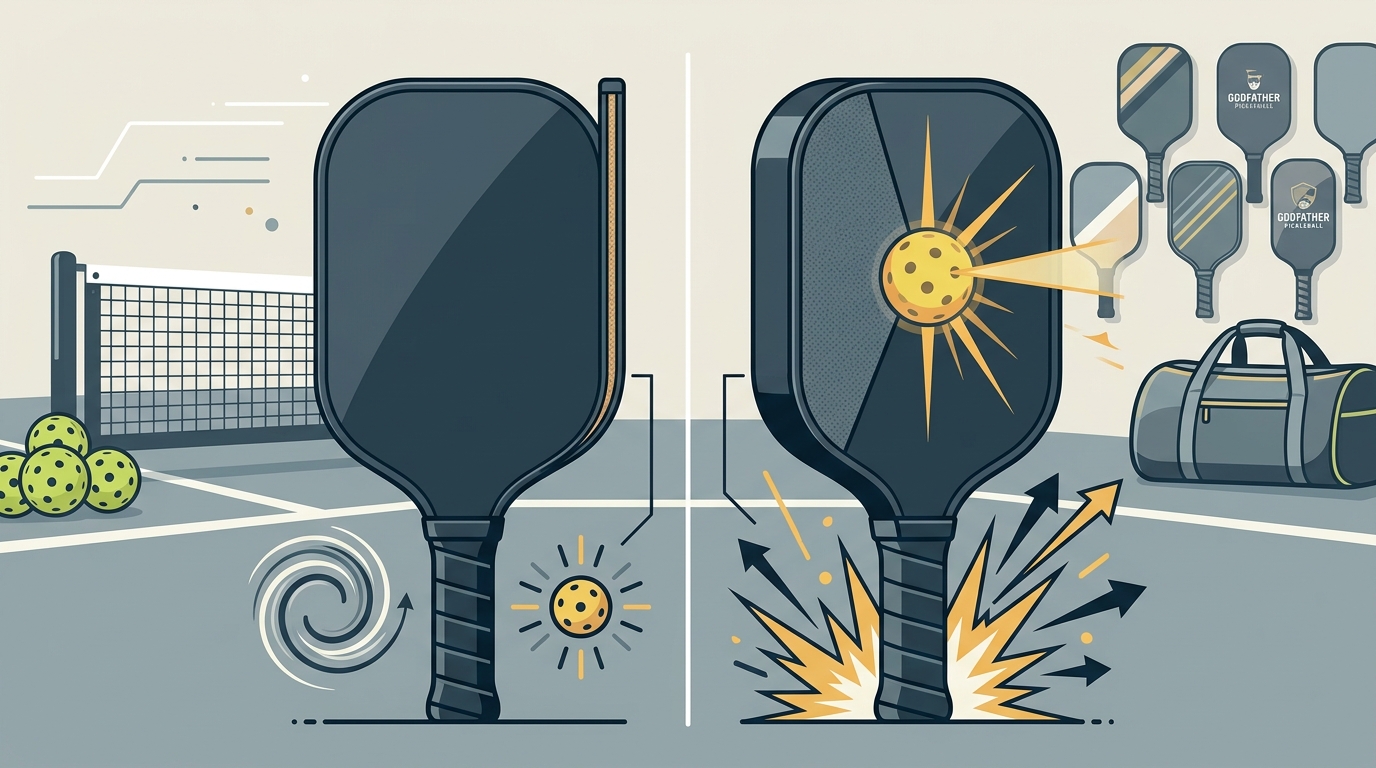
- Paddle thickness is the core depth, typically 16mm to 19mm, and directly impacts power and control.
- 16mm paddles are lighter, offering superior control and spin but less raw power and durability.
- 19mm paddles are heavier, providing maximum power, a larger sweet spot, and better durability.
- Beginners should start with mid-range thickness (17-18mm) for a balanced feel.
- Aggressive baseliners benefit from 19mm paddles, while finesse players prefer 16mm.
- Test different thicknesses in person to find the best match for your playing style.
Frequently Asked Questions
What is the standard thickness for pickleball paddles?
Standard pickleball paddles range from 16mm to 19mm. Most modern paddles fall within this range, with 16mm being the thinnest and 19mm being the thickest.
Does a thicker paddle hit harder?
Yes, a thicker paddle generally hits harder due to its greater mass and stiffness. However, it may sacrifice some control and spin potential.
Is a 16mm paddle good for beginners?
Not usually. 16mm paddles are very light and require good technique to generate power. Beginners are better served by mid-range thickness paddles.
How does thickness affect spin?
Thinner paddles (16mm) are more flexible, allowing for more dwell time and better spin generation. Thicker paddles (19mm) are stiffer, which can reduce spin potential.
Can I change the thickness of my paddle?
No, the thickness is determined by the core material and cannot be changed after manufacturing. You must buy a new paddle to change the thickness.
What is the best thickness for all-around play?
A 17mm or 18mm paddle offers the best balance of power and control for all-around play. It is suitable for most skill levels and playing styles.
Find Your Perfect Paddle at Godfather Pickleball
Choosing the right paddle thickness is a critical step in elevating your game. Whether you prefer the control of a 16mm paddle or the power of a 19mm design, Godfather Pickleball has the pro-tested equipment you need. Explore our curated collection to find the paddle that matches your style and skill level. Visit Godfather Pickleball today to discover your perfect match.