
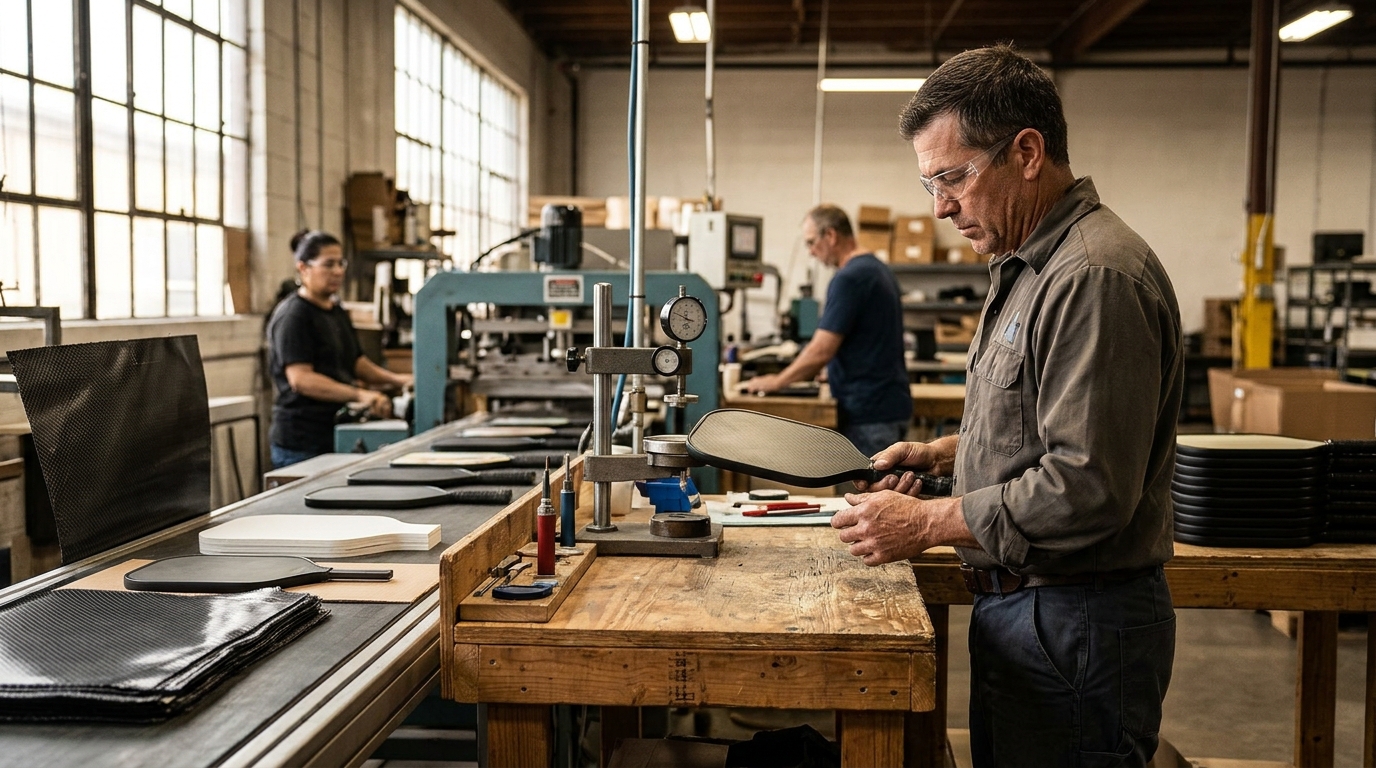
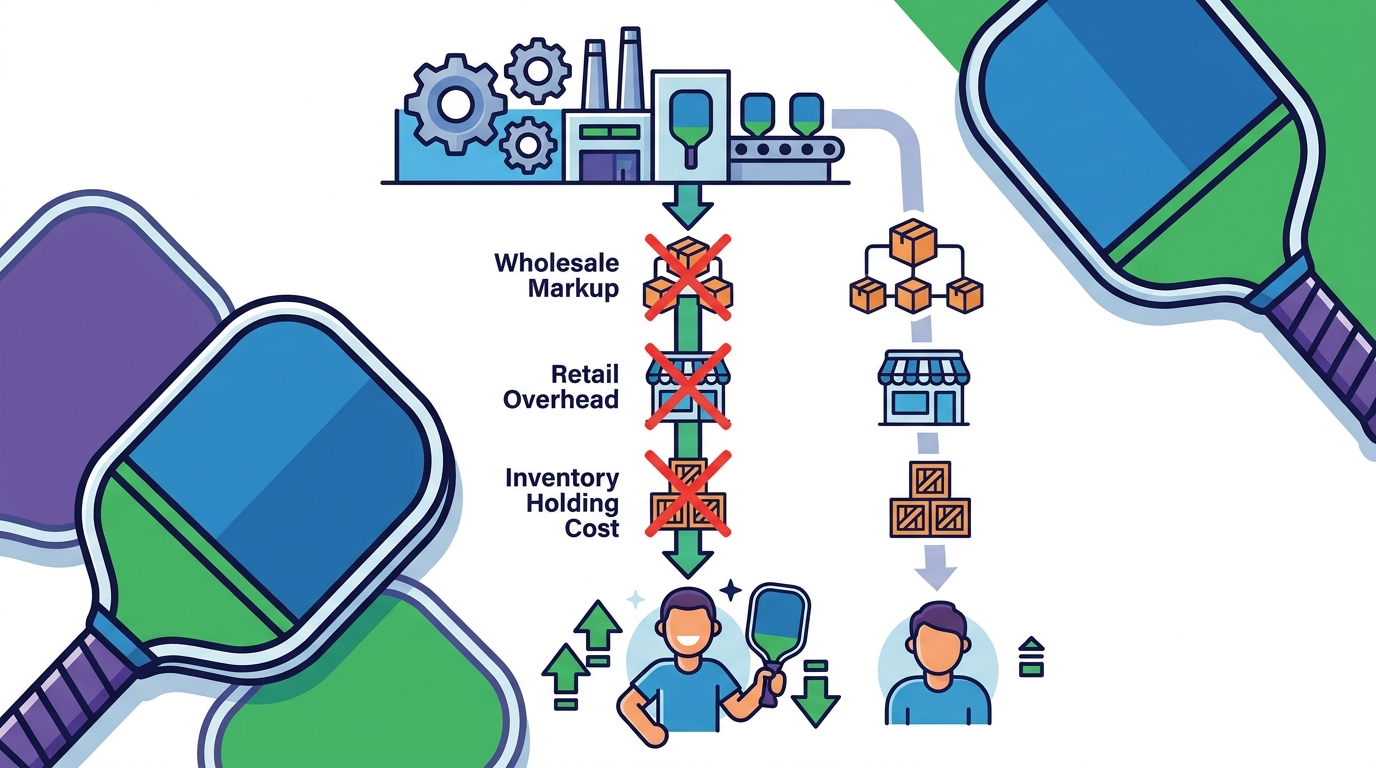
Factory direct pickleball paddle suppliers offer better prices by eliminating the multi-tiered distribution network that traditional retailers rely on. By selling directly to consumers, these suppliers remove the wholesale markups, retail overhead, and inventory holding costs that typically inflate the final price of a paddle. This direct-to-consumer model allows manufacturers to pass significant savings to the player while maintaining high-quality materials and professional-grade performance standards. For additional details, review the Contact information Godfather Pickleball.
The Economics of Removing Middlemen
Traditional retail distribution involves a complex chain of intermediaries, each adding a margin to the final product price. A paddle manufactured by a brand is typically sold to a distributor, who then sells it to a regional wholesaler, and finally to a brick-and-mortar or online retailer. At each stage, the entity adds a markup to cover their operational costs and profit. Supply chain elimination is the process of bypassing these intermediate steps to connect the manufacturer directly with the end user.
In the pickleball industry, this traditional model can result in a retail price that is two to three times the manufacturing cost. When a supplier operates on a factory direct model, they capture the margins that would have been distributed to wholesalers and retailers. This structural change in the supply chain is the primary driver of the lower price points seen in direct-to-consumer paddle markets. The savings are not achieved by lowering the quality of the materials but by optimizing the logistics and sales channels. according to Online MBA vs
Reducing Operational Overhead and Costs
Beyond the distribution chain, traditional retailers carry significant fixed costs that are baked into the price of every item they sell. These costs include physical store rent, utilities, in-store staff, and local advertising. Operational overhead is the ongoing expense of running a business, which must be recovered through product sales. Online-only or direct-to-consumer brands often have a much smaller physical footprint, which drastically reduces these fixed costs.
By operating primarily through digital channels, factory direct suppliers can allocate resources more efficiently. They do not need to maintain large showrooms or employ extensive sales teams in physical locations. Instead, they invest in digital marketing, customer support, and product development. This lean operational structure allows them to keep prices lower while still providing a high level of service. The reduction in physical overhead is a key factor in why direct suppliers can offer premium paddles at more competitive price points.
For instance, a traditional sporting goods store might spend a significant portion of its revenue on maintaining a large physical presence in a high-traffic area. A direct supplier, however, can use that budget to improve the paddle's core technology or offer better customer support. This reallocation of resources ensures that the value is passed on to the player in the form of lower prices and higher quality products. The result is a more efficient market where the focus remains on the product rather than the retail infrastructure. according to Online MBA vs
Inventory Management and Cash Flow Efficiency
By producing paddles in smaller batches or based on real-time demand, direct suppliers can minimize the capital tied up in unsold stock. This efficiency allows them to offer lower prices because they are not paying for the risk of holding large inventories. Additionally, direct suppliers can respond more quickly to market trends and player feedback, allowing them to iterate on their products without the burden of excess stock. This agility is a significant advantage in the fast-evolving pickleball market.
For example, a traditional retailer might order 1,000 units of a specific paddle model, only to find that demand shifts to a different model after a few months. The unsold inventory becomes a financial liability. A direct supplier, on the other hand, can produce 100 units, test the market, and adjust production based on actual sales data. This approach reduces waste and allows for more competitive pricing. The efficiency in inventory management is a critical component of the factory direct pricing model.
Targeted Marketing and Customer Acquisition
Traditional retailers often rely on broad, expensive marketing campaigns to drive foot traffic to their stores. These campaigns can include television ads, print media, and large-scale digital advertising, all of which are costly and often inefficient. Targeted marketing is a strategy that focuses on reaching specific customer segments with personalized messages, which is more cost-effective for direct-to-consumer brands. Factory direct suppliers can use data-driven marketing to reach pickleball players directly, reducing the cost of customer acquisition.
By leveraging social media, email marketing, and influencer partnerships, direct suppliers can build a loyal community of players who are interested in their products. This targeted approach allows them to spend less on marketing while achieving higher conversion rates. The savings from more efficient marketing can be passed on to the consumer in the form of lower prices. Additionally, direct suppliers can gather valuable feedback from their customers, which helps them improve their products and stay ahead of the competition.
For instance, a direct supplier might partner with a popular pickleball influencer to promote their new paddle model. This partnership can reach thousands of potential customers at a fraction of the cost of a traditional advertising campaign. The influencer's endorsement also builds trust and credibility, which is crucial in the pickleball community. This targeted marketing strategy is a key reason why factory direct suppliers can offer better prices than traditional retailers.
Maintaining Quality in a Direct Model
A common misconception is that lower prices from factory direct suppliers indicate lower quality. In reality, many direct suppliers use the same high-quality materials and manufacturing processes as traditional brands. Quality assurance is the process of ensuring that products meet specific standards, and it is a critical component of the factory direct model. By cutting out the middlemen, direct suppliers can invest more in quality control and product development.
Direct suppliers often have more control over the manufacturing process, allowing them to ensure that every paddle meets their high standards. They can also use premium materials, such as carbon fiber and polymer honeycomb cores, without the markup that would be added by a traditional retailer. This focus on quality ensures that players receive a high-performance product at a lower price. The direct model allows for a better value proposition, where the player gets more for their money.
Key Takeaways
- Factory direct suppliers eliminate the multi-tiered distribution network, removing wholesale and retail markups.
- Reduced operational overhead, such as physical store rent and staff, allows for lower prices.
- Agile inventory management reduces the risk and cost of holding large stock quantities.
- Targeted digital marketing is more cost-effective than broad traditional advertising campaigns.
- Direct suppliers maintain high quality by investing in premium materials and quality control.
- The direct-to-consumer model allows for better value, giving players pro-level performance at a lower cost.
Frequently Asked Questions
Why are factory direct paddles cheaper than retail ones?
Factory direct paddles are cheaper because they bypass the traditional distribution chain, eliminating the markups added by wholesalers and retailers. This allows the manufacturer to sell directly to the consumer at a lower price while maintaining quality.
Do direct suppliers use lower quality materials?
No, many direct suppliers use the same high-quality materials as traditional brands. The lower price comes from the efficiency of the direct-to-consumer model, not from compromising on quality.
How does inventory management affect pricing?
Is the warranty different for direct suppliers?
Warranties can vary by supplier, but many direct suppliers offer robust warranties because they have more control over the manufacturing process. It is important to check the specific warranty terms for each product.
Can I return a paddle bought from a direct supplier?
Return policies vary by supplier, but many direct suppliers offer generous return windows, such as 60 days, to allow players to test the paddle. Always check the return policy before purchasing.
Are direct suppliers more responsive to customer feedback?
Yes, direct suppliers often have more direct communication with their customers, allowing them to respond quickly to feedback and improve their products. This responsiveness is a key advantage of the direct model.
Conclusion
Factory direct pickleball paddle suppliers offer better prices by streamlining the supply chain, reducing overhead, and using efficient marketing and inventory strategies. This model allows them to pass significant savings to the player while maintaining high-quality materials and professional-grade performance. For players looking to elevate their game without paying a premium markup, exploring factory direct options is a smart choice. Explore the Godfather Pickleball paddle collection to see how direct-to-consumer pricing can benefit your game.