
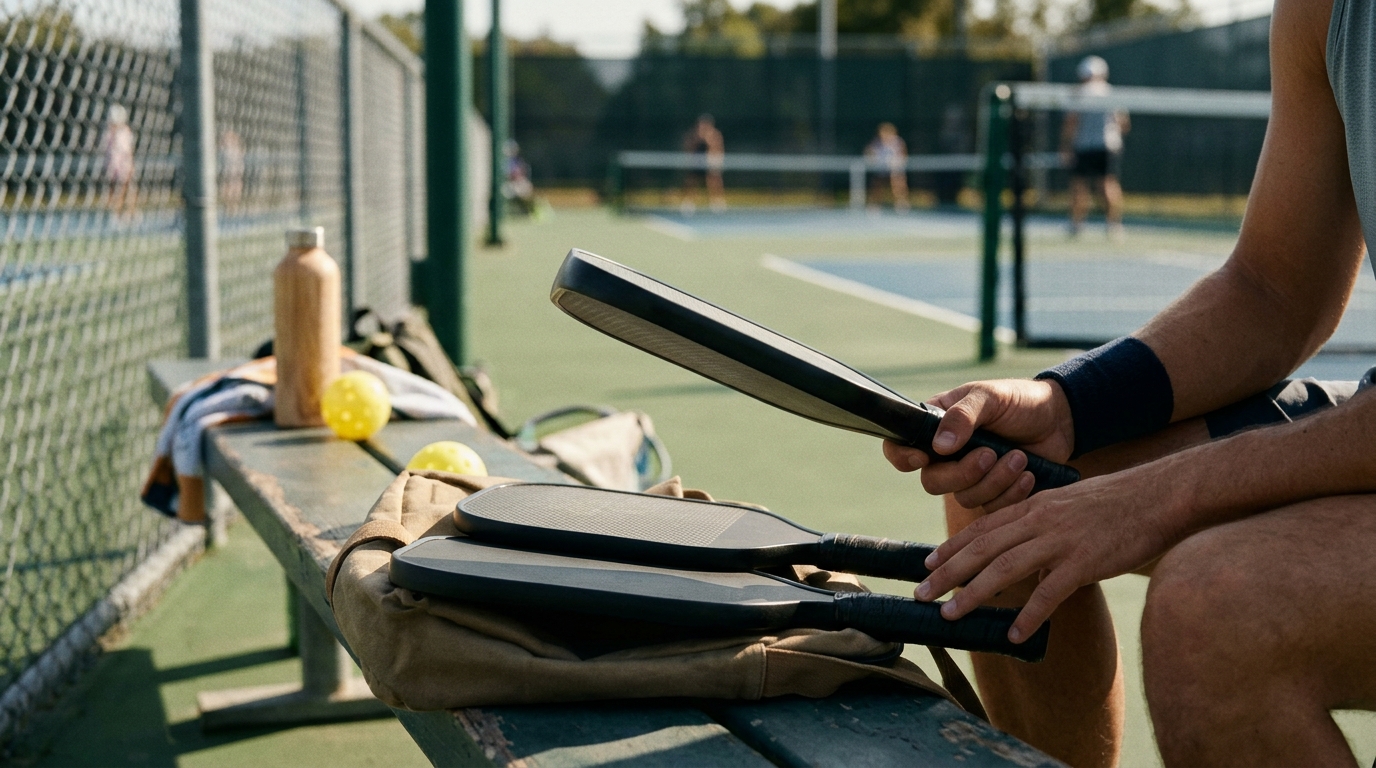
Choosing the right paddle thickness in millimeters (mm) takes about 15 minutes if you follow a structured decision process. This guide walks you through measuring your current setup, identifying your play style, and selecting a thickness that matches your skill level. By the end, you will know exactly which mm range fits your game and how to verify the fit on court. To plan your visit, you can reach out to the team directly.
Step 1: Assess Your Current Paddle and Play Style
Before you start, ensure you have your current paddle, a measuring tape, and 15 minutes of free time. You should also have a clear idea of your primary playing position (baseline, mid-court, or net). The action here is to measure your current paddle's core thickness and note your dominant shot type. A correct result is a written note stating your current thickness (e.g., 16mm) and your main weakness (e.g., lack of spin or power). This baseline prevents you from buying a paddle that feels identical to one that is already failing you.
Step 2: Understand the Physics of Paddle Thickness
Paddle thickness is the measurement of the core material between the face and the back of the paddle. Thicker paddles, typically ranging from 16mm to 18mm, are generally associated with more power and pop. Thinner paddles, usually between 13mm and 15mm, offer more dwell time and control. The relationship is not linear, but the general rule is that mass and core density influence energy transfer. A correct understanding means you can explain why a 16mm paddle feels different from a 14mm paddle without relying on marketing jargon. This knowledge helps you filter out specs that do not matter for your specific needs.
Step 3: Match Thickness to Your Skill Level
The action is to categorize your skill level and select a corresponding thickness range. Beginners should start with thinner paddles (13mm to 14mm) to maximize control and reduce arm strain. Intermediate players often benefit from a mid-range thickness (15mm to 16mm) that balances power and control. Advanced players may prefer thicker paddles (16mm to 18mm) for maximum power and spin generation. A correct result is a narrowed-down list of two or three thickness options that align with your skill tier. This step ensures you are not overbuying power you cannot control or underbuying power you need to compete.
Step 4: Test the Feel and Control Balance
The action is to physically test the paddle or review detailed player reviews for the specific model. Look for descriptions of "dwell time" and "sweet spot size." A correct result is a clear preference for how the paddle feels during a dink versus a drive. If you are buying online, read reviews from players with a similar skill level to yours. Pay attention to comments about wrist fatigue and vibration. This step confirms that the theoretical thickness matches the practical feel of the specific paddle model you are considering.
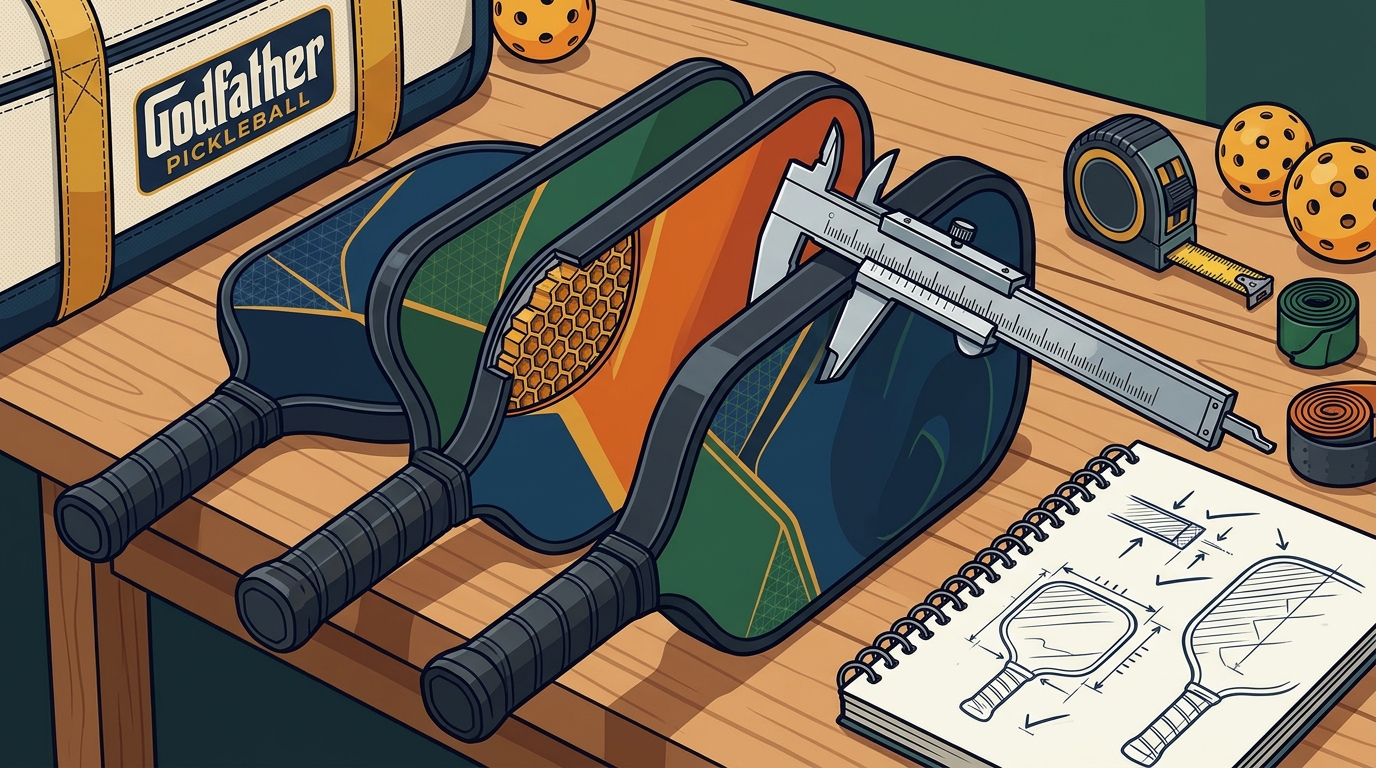
Step 5: Finalize Your Selection and Verify Fit
The action is to purchase the paddle and perform a on-court verification. Hit 20 dinks, 10 drives, and 5 serves. A correct result is a paddle that feels stable during drives and responsive during dinks. If the paddle feels too heavy or too light, the thickness may not be the only factor; weight distribution also matters. However, if the feel is consistently off, the thickness is likely the primary issue. This final step ensures the paddle integrates into your game plan before you commit to it for a full season.
When It Goes Wrong
Common failures include choosing thickness based solely on price, ignoring weight distribution, and not testing the paddle on court. If your paddle feels too heavy, you may have chosen a thickness that is too high for your arm strength. If it feels too light and lacks power, you may have chosen a thickness that is too low. The fix is to adjust the thickness by one millimeter in the opposite direction. Another common error is assuming all paddles of the same thickness feel identical. Core material and face texture significantly alter the feel. Always verify the specific model's reviews before buying.
Frequently Asked Questions
What is the standard thickness for a pickleball paddle?
Standard pickleball paddles typically range from 13mm to 18mm. Most all-around paddles fall in the 15mm to 16mm range, offering a balance of power and control. Specific models may vary slightly, so always check the manufacturer's specifications.
Does thicker always mean more power?
Generally, yes, but it is not the only factor. Core material, face texture, and weight distribution also influence power. A well-designed 15mm paddle can outperform a poorly designed 17mm paddle. Focus on the overall design rather than thickness alone.
How do I know if my paddle is too thick for my skill level?
If you struggle with control, experience wrist fatigue, or find it difficult to dink accurately, your paddle may be too thick. Thicker paddles require more strength to maneuver. If you are a beginner or intermediate player, consider stepping down to a 14mm or 15mm paddle.
Can I change the thickness of my paddle?
No, you cannot change the thickness of a paddle after purchase. The core is a fixed component of the paddle's construction. You must buy a new paddle with the desired thickness. This is why it is important to research thoroughly before purchasing.
Where can I find paddles with specific thickness options?
You can find a wide range of paddle thickness options at Godfather Pickleball. They offer a curated selection of pro-tested paddles, allowing you to filter by specifications and player endorsements to find the right fit for your game. Learn more: Contact information ndash Godfather.