Essential Quality Standards and Features to Compare When Shopping for Pickleball Equipment Online
The global pickleball market has experienced explosive growth, with industry reports indicating that participation rates have surged by over 100% in recent years. This rapid expansion has flooded the market with equipment ranging from professional-grade tools to low-quality novelties. Understanding the technical specifications behind paddles, balls, and apparel is no longer optional for serious players. It is the only way to ensure your investment translates to better performance on the court. This guide breaks down the critical quality standards you must evaluate before making any online purchase. (Godfather Bags ndash Godfather)
Understanding Carbon Fiber Grades and Core Materials
The heart of any high-performance paddle lies in its face material and core composition. When shopping online, you will encounter terms like "carbon fiber" and "polymer." These are not marketing buzzwords. They are specific engineering choices that dictate spin, power, and durability.
Carbon fiber is a lightweight, high-strength material derived from thin filaments of carbon atoms. It is the industry standard for elite play because it offers an exceptional strength-to-weight ratio. However, not all carbon fiber is created equal. The most critical grade used in professional equipment is Toray T700. This specific grade of carbon fiber provides the necessary stiffness for powerful drives while maintaining enough flexibility for precise dinks. Lower-quality paddles often use fiberglass or cheaper carbon blends that lack the structural integrity to withstand high-velocity impacts.
The core material is equally important. A polymer honeycomb core is the standard for modern paddles. This structure absorbs shock and reduces vibration, protecting your arm from injury. The thickness of this core, typically ranging from 14mm to 16mm, directly influences the paddle's power potential. Thicker cores generally offer more power and a larger sweet spot, while thinner cores provide more control and touch. When evaluating a paddle, always check the core thickness specification. A 14mm core is ideal for players who prioritize spin and precision, whereas a 16mm core suits those seeking maximum power.
For more insights on material science, you can explore carbon fiber applications in sports engineering. The choice of core material also impacts the paddle's lifespan. High-density polymer cores resist compression over time, ensuring the paddle maintains its performance characteristics for years.
Paddle Geometry: Weight, Balance, and Surface Texture
Once you have identified the correct materials, you must evaluate the physical geometry of the paddle. These factors determine how the paddle feels in your hand and how it interacts with the ball during play.
Weight is the first geometric consideration. Paddles typically range from 7.3 ounces to 8.5 ounces. Lighter paddles under 7.8 ounces are easier to maneuver, making them ideal for quick reflexes at the kitchen line. Heavier paddles over 8.0 ounces provide more inherent power and stability against heavy shots. The balance point is just as critical. A head-heavy paddle shifts weight toward the hitting surface, increasing power but potentially slowing down hand speed. A balanced or slightly head-light paddle offers better control and faster swing speeds.
Surface texture plays a massive role in spin generation. Modern paddles feature textured faces that grip the ball, allowing players to impart heavy topspin or slice. The roughness of this texture is often measured in grit levels. Higher grit surfaces generate more spin but may wear down faster. Lower grit surfaces are smoother and more durable but offer less spin potential. When shopping online, look for descriptions of the surface finish. A matte finish often indicates a textured surface designed for maximum spin, while a glossy finish may suggest a smoother, more durable surface.
According to USA Pickleball regulations, all paddles must meet specific size and weight limits to ensure fair play. The paddle length cannot exceed 24 inches, and the width cannot exceed 8.5 inches. Additionally, the surface must be flat and smooth, with no protrusions that could unfairly grip the ball. Understanding these regulations helps you filter out non-compliant equipment when shopping.
Ball Construction: Indoor vs. Outdoor Durability
Pickleball balls are not one-size-fits-all. The construction of the ball is dictated by the playing surface. Indoor balls are designed for smooth gym floors, while outdoor balls must withstand rough asphalt and concrete courts.
Indoor balls typically have 26 larger holes. The larger holes reduce air resistance, allowing the ball to travel faster on the smooth indoor surface. These balls are made from softer plastic to provide better touch and control. Outdoor balls, on the other hand, have 40 smaller holes. The smaller holes create more drag, slowing the ball down to a manageable speed on windy outdoor courts. The plastic used in outdoor balls is harder and more durable to resist cracking and chipping from repeated impacts with rough surfaces.
When shopping for balls, always check the intended use case. Using an indoor ball outdoors will result in rapid degradation and poor performance. Conversely, using an outdoor ball indoors can make the game too slow and cumbersome. The number of holes is the most reliable indicator of a ball's intended environment. For competitive play, look for balls that meet USA Pickleball tournament standards. These balls undergo rigorous testing for bounce, diameter, and durability to ensure consistency in high-stakes matches.
Apparel Technology: Moisture Wicking and Mobility
Pickleball is a high-intensity sport that requires rapid lateral movements and quick bursts of energy. Your apparel must support this physical demand. The fabric technology used in performance wear is just as important as the materials in your paddle.
Moisture-wicking is the primary feature to look for in pickleball apparel. This technology pulls sweat away from the skin to the outer surface of the fabric, where it can evaporate quickly. This keeps you dry and comfortable, preventing chafing and overheating. Synthetic blends, such as polyester and spandex, are the standard for performance wear. Natural fibers like cotton absorb moisture and become heavy, leading to discomfort and restricted movement.
Mobility is the second critical factor. Pickleball involves a wide range of motion, including lunges, reaches, and rotations. Apparel must have four-way stretch capabilities to move with your body without binding or restricting movement. Look for garments with gusseted underarms and articulated knees. These design elements enhance freedom of motion and reduce the risk of fabric tearing during intense play. Additionally, consider the fit of the apparel. A tailored fit reduces drag and prevents loose fabric from interfering with your swing.
For more information on textile engineering, you can read about moisture-wicking fabric technology. The right apparel can significantly impact your endurance and performance, allowing you to maintain peak energy levels throughout long matches.
Feature Comparison: Premium vs. Budget Equipment
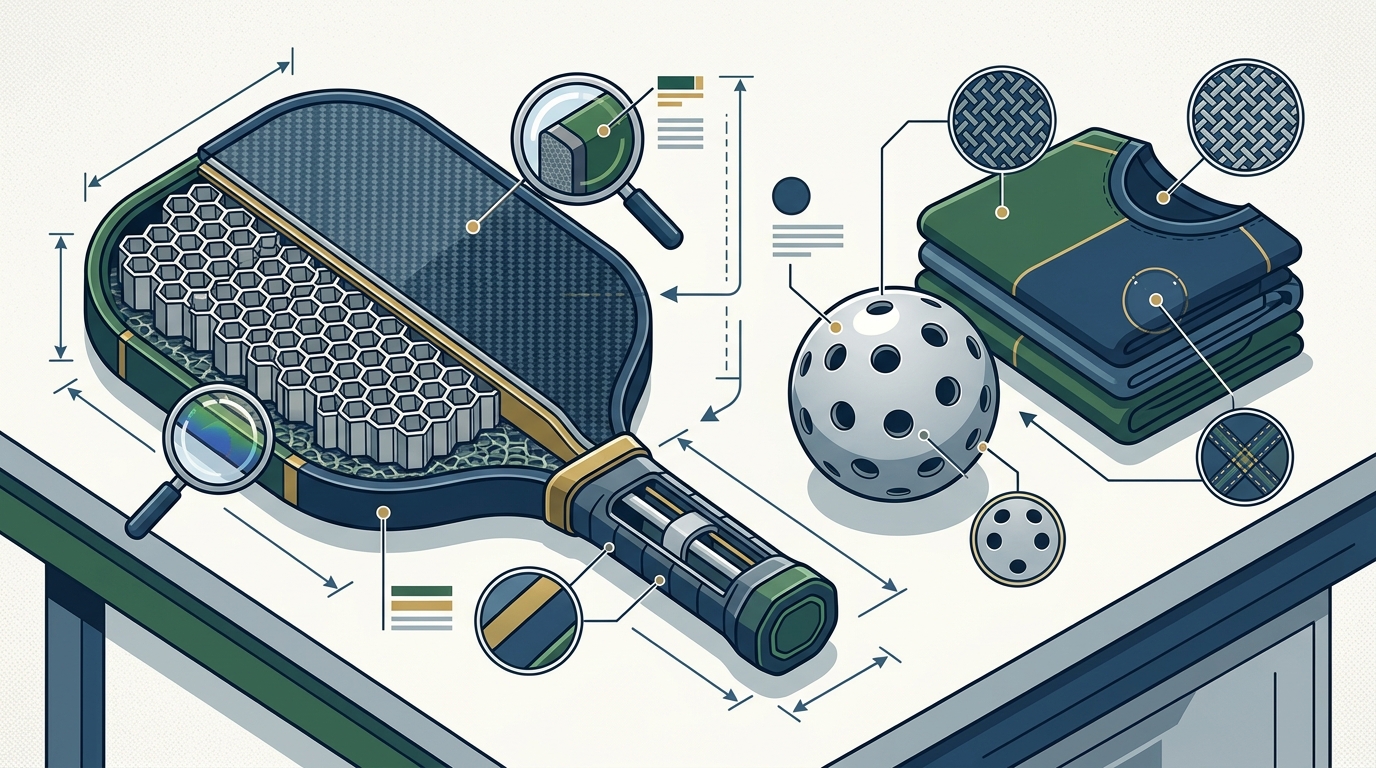
Understanding the difference between premium and budget equipment helps you make informed decisions about where to invest your money. The table below compares key features across different price points.
| Feature | Premium Equipment | Budget Equipment |
|---|---|---|
| Carbon Fiber Grade | Toray T700 or equivalent high-grade carbon | Fiberglass or low-grade carbon composite |
| Core Material | High-density polymer honeycomb | Standard or low-density polymer |
| Surface Texture | Engineered grit for maximum spin | Smooth or inconsistent texture |
| Durability | Resistant to cracking and delamination | Prone to wear and tear over time |
| Warranty/Trial | 60-day risk-free trial or extended warranty | Limited or no warranty |
| Price Range | $150 - $250+ | $50 - $100 |
Premium equipment often justifies its higher price through superior materials and engineering. The use of Toray T700 carbon, for example, ensures consistent performance and longevity. Budget equipment may save money upfront but often lacks the durability and performance characteristics needed for serious play. Investing in quality equipment can reduce long-term costs by eliminating the need for frequent replacements.
Key Takeaways
- Carbon Fiber Grade Matters: Always look for Toray T700 carbon fiber for the best balance of power and control.
- Core Thickness Dictates Play Style: Choose 14mm for spin and precision, or 16mm for maximum power.
- Ball Holes Indicate Use Case: 26 holes for indoor play, 40 holes for outdoor durability.
- Apparel Must Wick Moisture: Synthetic blends with four-way stretch are essential for performance.
- Warranty Indicates Confidence: Brands offering 60-day trials stand behind their product quality.
- Pro Agency Insight: Equipment sourced directly from pro agencies often skips retail markup, offering better value.
- Regulatory Compliance: Ensure all paddles meet USA Pickleball size and surface regulations.
Frequently Asked Questions
What is the best carbon fiber for pickleball paddles?
Toray T700 is widely considered the best carbon fiber for pickleball paddles due to its high strength-to-weight ratio and excellent spin potential.
How do I choose between indoor and outdoor pickleball balls?
Choose balls with 26 larger holes for indoor play on smooth surfaces, and balls with 40 smaller holes for outdoor play on rough asphalt or concrete.
What is the ideal paddle weight for beginners?
A paddle weight between 7.8 and 8.2 ounces is ideal for beginners, offering a balance of power and control without being too heavy to maneuver.
Why is core thickness important in a pickleball paddle?
Core thickness affects the paddle's power and sweet spot size. Thicker cores (16mm) provide more power, while thinner cores (14mm) offer more control and touch.
Can I use indoor balls on an outdoor court?
No, indoor balls are made of softer plastic and will crack or chip quickly on rough outdoor surfaces. Always use outdoor-specific balls for exterior courts.
What is the Godfather Pickleball Agency?
The Godfather Pickleball Agency is a professional representation firm that supports elite players with endorsements, marketing, and contract negotiations.
Does the Godfather Collection offer a trial period?
Yes, the Godfather Collection offers a 60-day risk-free trial, allowing you to test the paddles and return them for a full refund if they do not meet your expectations.
Shop the Godfather Collection
Stop paying for marketing markup and start investing in performance. The Godfather Collection offers paddles built with the same Toray T700 carbon and polymer cores used by the world's best pros, but at a fraction of the cost. With a 60-day risk-free trial, you can test the equipment on your own court and experience the difference in power, spin, and control. Visit our main store page to explore the full range of paddles, apparel, and accessories. Join the family of elite players who have already made the switch to superior quality.