
The Physics of Core Thickness
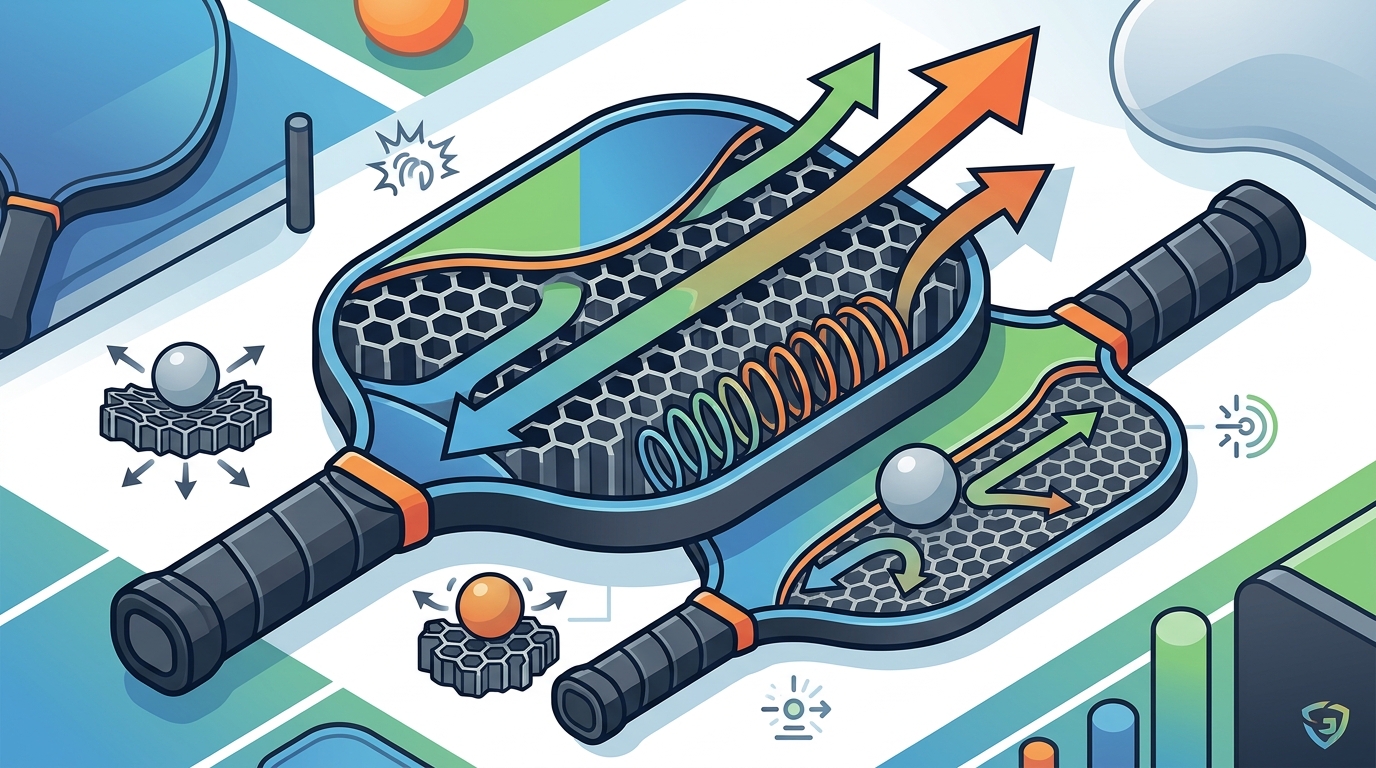
Understanding the mechanics of a paddle requires looking at the core. The core is the central layer of the paddle, usually made of polymer honeycomb or foam. Its thickness determines how much energy is transferred from the paddle to the ball upon impact. A thicker core acts like a larger spring, storing and releasing more energy. This results in a higher coefficient of restitution, which players feel as 'pop'.
Conversely, a thinner core absorbs more energy. This absorption allows for greater dwell time, which is the duration the ball stays on the paddle face. Dwell time is critical for control. When the ball stays on the face longer, you have more time to adjust your angle and spin. This is why control-focused players often prefer thinner profiles. The balance between energy return and energy absorption is the fundamental trade-off in paddle design.
Power Versus Control Trade-offs
Players often ask if they can have both power and control. In reality, there is a direct inverse relationship between the two. A 16mm core is the standard for power players. It provides a large sweet spot and explosive energy transfer. This is ideal for baseline players who need to drive the ball deep. However, this thickness can make the paddle feel 'dead' or unresponsive during soft shots.
A 14mm core is the standard for control players. It offers a smaller sweet spot but superior touch. This is essential for kitchen players who rely on dinks and third-shot drops. The thinner profile allows for precise placement. At Godfather Pickleball, we see this distinction clearly in our product lines. The Boss paddle is engineered for power, while The SmokeShow is designed for spin and precision. Choosing the wrong thickness can limit your game, regardless of your skill level.
Impact on Spin Generation
Spin is a critical component of modern pickleball. Paddle thickness affects spin in two ways: dwell time and surface texture. A thinner core increases dwell time, allowing the paddle to 'brush' the ball longer. This extended contact time enables players to generate more topspin and sidespin. The SmokeShow paddle utilizes a thin core to maximize this effect. Its design prioritizes the ability to create heavy spin on dinks and drives.
Thicker cores, while powerful, can reduce the ability to impart spin. The ball leaves the face faster, reducing the time available for the paddle to rotate the ball. This is why spin-focused players often avoid the thickest paddles. The surface texture of the face also plays a role, but the core thickness sets the baseline for how much spin is possible. If your game relies on heavy spin, a thinner core is a significant advantage.
Matching Thickness to Your Play Style
Selecting the right paddle thickness depends on your position and strategy. Baseline players who hit from the back of the court should consider a 16mm core. This thickness provides the power needed to keep opponents pinned. Kitchen players who stay near the net should look for a 14mm core. This thickness offers the control needed for soft shots and quick reactions. Hybrid players who move between the baseline and the kitchen may prefer a 15mm core. This middle ground offers a balance of power and control.
Your swing speed also matters. Players with slower swings benefit from thicker cores because the paddle adds energy to the shot. Players with faster swings may prefer thinner cores because they generate their own power. At Godfather Pickleball, we recommend testing different thicknesses to find your sweet spot. Our 60-day trial allows you to experiment with different paddles without risk. This hands-on approach ensures you choose a paddle that fits your game.
Durability and Feel Considerations
Core thickness also affects the durability and feel of the paddle. Thicker cores are generally more durable. They can withstand more impact without deforming. This is important for players who hit hard drives. Thinner cores are more susceptible to denting and deformation over time. However, modern materials have improved the durability of thinner paddles. The feel of the paddle is another factor. Thicker paddles often feel more solid and stable. Thinner paddles feel lighter and more responsive. This difference in feel can affect your confidence on the court.
Weight is closely related to thickness. Thicker paddles are usually heavier. This added weight can help with power but may cause fatigue over long matches. Thinner paddles are lighter, which allows for faster hand speed. This is beneficial for players who rely on quick reflexes. The balance between weight and thickness is crucial. At Godfather Pickleball, we design our paddles to offer the best possible feel for their intended use. The Boss is built for power, while The SmokeShow is built for precision. Understanding these differences helps you make an informed decision.
Key Takeaways
- Pickleball paddle thickness is the measurement of the core, typically 14mm to 16mm.
- Thicker cores (16mm) provide more power and pop, ideal for baseline players.
- Thinner cores (14mm) offer more control and dwell time, ideal for kitchen players.
- Spin generation is enhanced by thinner cores due to increased dwell time.
- Your swing speed and playing style should guide your thickness choice.
- Thicker paddles are generally more durable but heavier.
- Testing different paddles is the best way to find your ideal thickness.
Frequently Asked Questions
What is the standard thickness for pickleball paddles?
The standard thickness for pickleball paddles is 16mm. This is the most common thickness found in the market. It offers a good balance of power and control for most players.
Is a thicker paddle always better for power?
Generally, yes. A thicker core provides more energy transfer, resulting in more power. However, your swing speed and technique also play a significant role in power generation.
How does thickness affect spin?
Thinner cores allow for more dwell time, which increases the ability to generate spin. Thicker cores reduce dwell time, making it harder to impart heavy spin on the ball.
Can I use a thin paddle for power shots?
Yes, but you will need to generate more of your own power. A thin paddle requires a faster swing to achieve the same power as a thick paddle. This can be tiring over long matches.
What thickness is best for beginners?
Beginners often benefit from a 16mm core. It provides a larger sweet spot and more power, which helps them keep the ball in play. As their skills improve, they may switch to a thinner paddle for more control.
Does core thickness affect the weight of the paddle?
Yes, thicker cores are generally heavier. This added weight can help with power but may cause fatigue. Thinner cores are lighter, allowing for faster hand speed.
Where can I find paddles with different thickness options?
Godfather Pickleball offers a range of paddles with different thickness options. Our collection includes paddles designed for power, control, and spin. You can explore our lineup to find the right fit for your game.
Conclusion
Pickleball paddle thickness is a critical factor in your performance. It directly affects power, control, and spin. Understanding the physics behind core thickness helps you make an informed decision. At Godfather Pickleball, we are committed to helping you find the right paddle for your game. Explore our collection of pro-tested paddles and find the thickness that matches your playing style. Visit Godfather Pickleball today to elevate your game.