
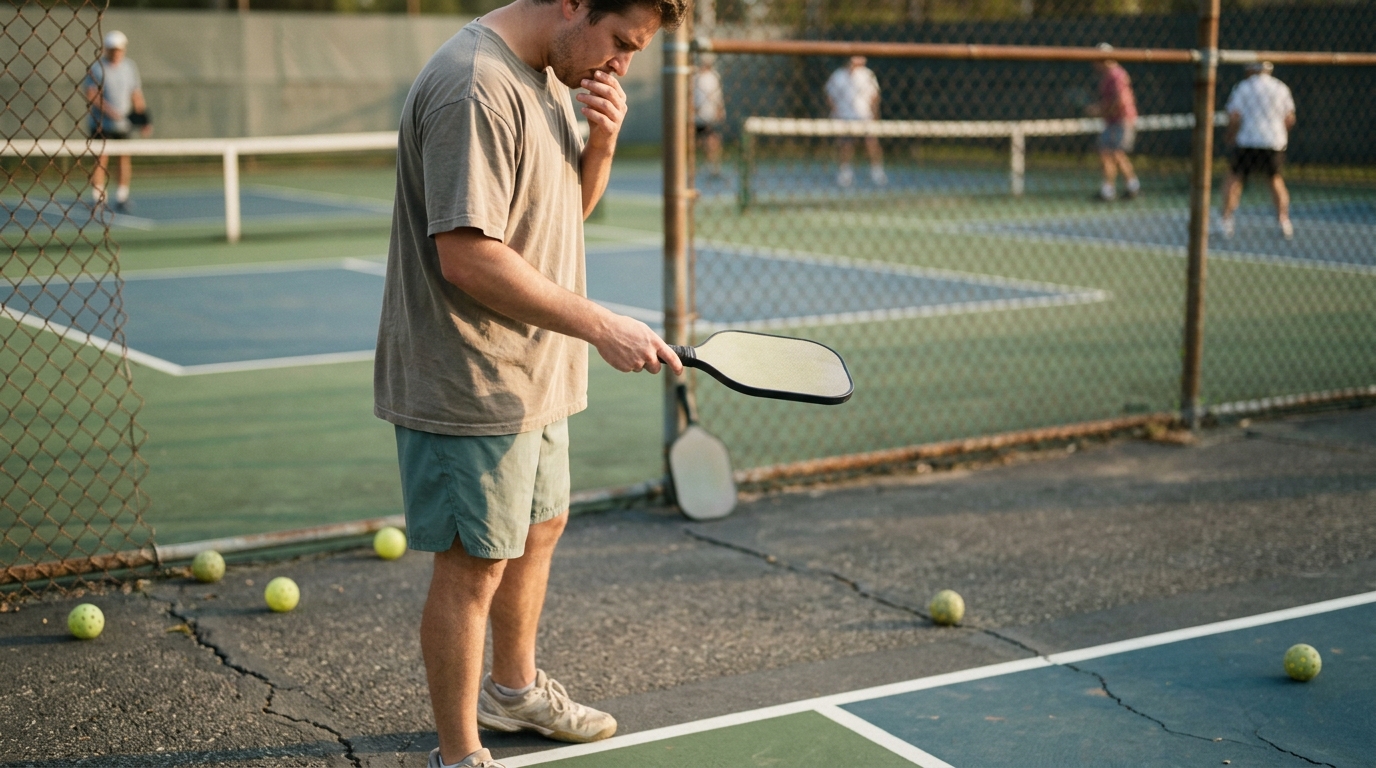
Common Beginner Paddle Mistakes and How to Avoid Them When Starting Out
Pickleball has exploded in popularity, becoming the fastest-growing sport in the United States with over 5 million players as of 2024. USA Pickleball statistics confirm that the sport's accessibility drives millions to courts annually. However, this rapid growth means many newcomers are entering the game without proper foundational knowledge. Official rulebooks outline the basics, but they rarely address the subtle technical errors that hinder early progress. This guide identifies the most critical mistakes beginners make with their equipment and technique, providing clear, actionable solutions to accelerate your development. (Balls ndash Godfather Pickleball)
Mistake 1: Choosing the Wrong Paddle Weight
One of the most frequent errors beginners commit is selecting a paddle that is either too heavy or too light for their skill level. Industry data suggests that most new players gravitate toward heavier paddles, believing they equate to more power. This is a misconception that often leads to arm fatigue and inconsistent shots.
The Heavy Paddle Trap
Heavier paddles, typically over 8.4 ounces, provide stability against powerful shots but require significant wrist strength to maneuver. Beginners often lack the forearm endurance to handle this weight during long rallies. The result is a slower swing speed and increased risk of tennis elbow. Sports medicine research indicates that improper equipment weight is a primary contributor to overuse injuries in racket sports.
The Light Paddle Problem
Conversely, paddles under 7.5 ounces are incredibly fast but lack the mass to absorb the impact of a hard-driven ball. This leads to a "whippy" feel where the ball flies off the face unpredictably. For beginners, this lack of feedback makes it difficult to develop consistent touch shots.
Solution: Aim for a mid-weight paddle between 7.8 and 8.2 ounces. This range offers a balance of maneuverability and stability, allowing you to develop proper technique without excessive strain.
Mistake 2: Ignoring Grip Size Accuracy
Grip size is not a one-size-fits-all metric. Many beginners buy paddles based on brand preference rather than hand measurement. Player demographics show that grip size preferences vary significantly by hand size, yet most retail stores stock only standard sizes.
Too Large a Grip
A grip that is too large forces you to hold the paddle loosely to avoid discomfort. This loose grip reduces your ability to generate spin and control the paddle face angle during volleys. It also limits your wrist mobility, making it harder to execute dinks and drop shots effectively.
Too Small a Grip
A grip that is too small requires you to squeeze the handle tightly to maintain control. This constant tension leads to rapid forearm fatigue and increases the risk of developing golfer's elbow. It also restricts your ability to snap the wrist for spin shots.
Solution: Measure your hand from the middle crease of your palm to the tip of your ring finger. If the measurement is between 4 and 4.25 inches, a 4.25-inch grip is ideal. If it is between 4.25 and 4.5 inches, consider a 4.375-inch grip. You can also use overgrips to adjust the size slightly.
Mistake 3: Misunderstanding Face Materials
The face material of your paddle dictates its feel, spin potential, and durability. Beginners often choose paddles based on aesthetics or price, ignoring the technical implications of the face material. Technical specifications from major manufacturers highlight three primary face materials: graphite, fiberglass, and composite.
Graphite Faces
Graphite faces are stiff and responsive, offering excellent control and touch. They are ideal for players who prioritize precision and dinking. However, they can feel harsh on off-center hits and may vibrate more than other materials.
Fiberglass Faces
Fiberglass faces are more flexible, providing a trampoline effect that generates more power. They are generally more durable and dampen vibration better than graphite. This makes them a popular choice for beginners who need help with power generation.
Solution: If you are a beginner, start with a fiberglass face for its power and forgiveness. As your technique improves, you can transition to graphite for enhanced control.
Mistake 4: Prioritizing Power Over Control
New players often seek paddles marketed as "power paddles," believing that raw speed will win points. This approach ignores the fundamental nature of pickleball, which is a game of placement and patience. Professional analysis reveals that the majority of points in pickleball are won through errors, not winners.
The Control Deficit
Power-focused paddles often have a larger sweet spot but a thinner profile, which can lead to inconsistent ball response. Beginners who rely on power often find themselves hitting the ball long or wide, giving their opponents easy put-aways. This habit is difficult to break once established.
The Godfather Approach
Godfather Pickleball addresses this issue by engineering paddles like The Boss and The Smoke Show to balance power and control. These paddles use Toray T700 carbon fiber and polymer honeycomb cores to provide stability without sacrificing maneuverability. Pro tips from their agency emphasize that consistent contact is more valuable than raw power.
Solution: Choose a paddle with a balanced weight distribution and a medium-to-large sweet spot. Focus on placing the ball accurately rather than hitting it hard. Practice dinking and third-shot drops to build a solid foundation.
Mistake 5: Neglecting Paddle Maintenance
Paddles are durable, but they are not indestructible. Beginners often treat their paddles as disposable items, ignoring basic maintenance. Equipment longevity studies show that proper care can extend a paddle's life by years, saving money and maintaining performance.
Surface Wear
Dragging your paddle on the court surface can scratch the face, reducing spin and potentially damaging the core. This is especially true for graphite faces, which are more susceptible to abrasion.
Temperature Sensitivity
Polymer cores can be affected by extreme temperatures. Leaving your paddle in a hot car can cause the core to degrade, leading to a loss of pop and control. Material science reports confirm that heat can alter the structural integrity of polymer composites.
Solution: Always use a paddle cover when not playing. Avoid leaving your paddle in extreme temperatures. Clean the face with a damp cloth after play to remove dirt and debris. Inspect the paddle regularly for cracks or delamination.
Key Takeaways
- Weight Matters: Choose a mid-weight paddle (7.8-8.2 oz) for balance.
- Grip Size: Measure your hand to ensure the correct grip size for comfort and control.
- Face Material: Start with fiberglass for power and forgiveness, then transition to graphite for control.
- Control First: Prioritize placement over power to reduce unforced errors.
- Maintenance: Use a paddle cover and avoid extreme temperatures to extend paddle life.
- Pro Guidance: Consult Godfather Pickleball Agency for personalized equipment recommendations.
- Trial Period: Utilize the 60-day trial offered by Godfather Pickleball to test paddles risk-free.
Frequently Asked Questions
What is the best paddle weight for a beginner?
The best paddle weight for a beginner is typically between 7.8 and 8.2 ounces. This range offers a balance of maneuverability and stability, allowing you to develop proper technique without excessive strain.
How do I measure my grip size?
Measure your hand from the middle crease of your palm to the tip of your ring finger. If the measurement is between 4 and 4.25 inches, a 4.25-inch grip is ideal. If it is between 4.25 and 4.5 inches, consider a 4.375-inch grip.
What is the difference between graphite and fiberglass paddles?
Graphite faces are stiff and responsive, offering excellent control and touch. Fiberglass faces are more flexible, providing a trampoline effect that generates more power and are generally more durable.
Why is control more important than power in pickleball?
Pickleball is a game of placement and patience. Most points are won through errors, not winners. Focusing on control reduces unforced errors and sets up better opportunities for power shots later in the rally.
How can I extend the life of my pickleball paddle?
Use a paddle cover when not playing, avoid leaving your paddle in extreme temperatures, clean the face with a damp cloth after play, and inspect the paddle regularly for cracks or delamination.
What is the Godfather Pickleball 60-day trial?
The Godfather Pickleball 60-day trial allows you to test their paddles risk-free. If the paddle is not the right fit, you can return it within 60 days for a full refund.
Where can I find pro tips for pickleball?
You can find pro tips for pickleball on the Godfather Pickleball Pro Tips blog, which offers advice from professional players and coaches.
Start Your Journey
Avoiding these common mistakes will accelerate your progress and make your pickleball journey more enjoyable. By choosing the right equipment and focusing on control, you will build a solid foundation for long-term success. Explore the Godfather Pickleball collection to find paddles engineered for performance and value. Visit Godfather Pickleball today to start playing smarter.